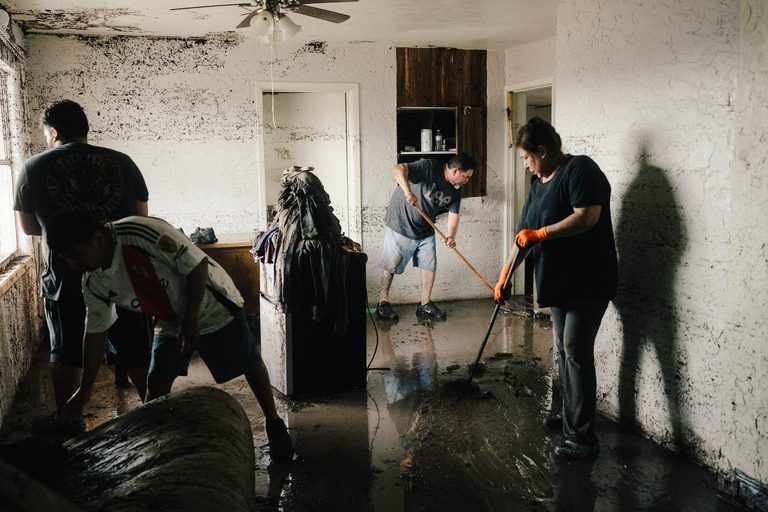
Six weeks after the July floods that devastated homes, bridges and roads across southwest Texas, the Trump administration has not yet approved the majority of the requested federal disaster assistance for individuals and local governments. The delay is forcing county leaders in Uvalde and Kerr to confront a growing backlog of repair needs and a shortage of temporary housing for displaced residents.
Local officials sound the alarm
Uvalde County Mayor Hector R. Luevano told residents he has no update on when federal aid will arrive. Acting County Judge Jerry W. Bates echoed the sentiment, saying the community is “looking for help” and has heard nothing from Washington.
In Kerr County, where many are still recovering from a second flood in as many years, Todd Bock, executive director of the Kerr Economic Development Corporation, warned that without federal funds the county cannot provide temporary shelter, vehicle repairs or make homes livable again. “We’re in desperate need of that (federal aid) in order for us to start on what we call a full recovery,” Bock said.
Federal response under the Trump administration
President Trump signed a major FEMA disaster declaration for the deadly July 4, 2025 flood within days, but this year’s request has stalled. Research by Andrew Rumbach of the Urban Institute, cited by The Texas Tribune, shows that since President Trump returned to the White House, his administration has taken an average of nine‑and‑a‑half weeks to approve major disaster funding—about three times longer than the roughly three‑week average of prior administrations since 2000.
While the president quickly approved a limited emergency declaration on July 18, which provides up to $5 million for health and safety measures, the larger major disaster declaration—estimated at $489.7 million—remains pending. FEMA’s website indicates only direct emergency work has been funded so far; long‑term infrastructure repairs and individual assistance await a final decision.
Impact on families and local governments
Maddie Sloan, director of the Disaster Recovery and Fair Housing Project at Texas Appleseed, warned that without federal aid, families lacking resources may be forced to remain in unsafe homes or miss essential items such as computers for school. Local governments also risk unreimbursed costs for debris removal and infrastructure repairs, forcing hard budget choices.
Jim Elliott, a sociology professor at Rice University, noted that rural counties like Uvalde and Kerr are especially vulnerable because they lack the tax base and labor market strength of larger cities.
State and congressional appeals
Governor Greg Abbott requested assistance for 28 counties on July 17 and later expanded the request to include individuals in 30 counties, citing an “unprecedented frequency of disasters” that includes recent wildfires and Hurricane Beryl. U.S. Senators Ted Cruz and John Cornyn have also urged President Trump to approve the declaration.
White House spokesperson Lauren Bis said the administration reviews disaster requests “with great care and consideration” to ensure tax dollars are well‑spent. A council appointed by President Trump in May recommended shifting more emergency‑response authority to state and local governments, but Texas currently lacks a program to support individual survivors.
Looking ahead
As the floodwaters recede, the pressing question remains: how will Texas communities fund the billions needed for full recovery if federal assistance continues to be delayed? Local leaders and residents alike are awaiting a decisive response from the Trump administration.
Original reporting: Texas Tribune (HLL/CB) — read the source article.