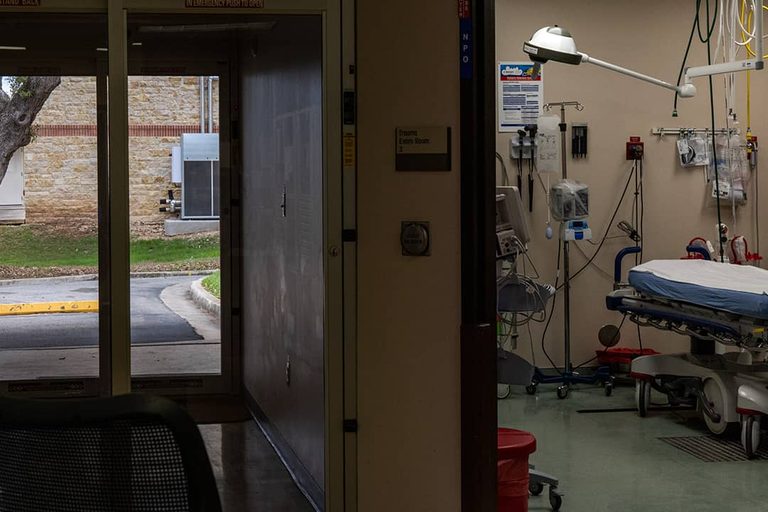
Texas leads the nation in the number of rural hospitals threatened with closure. Fifty facilities—more than any other state—are flagged as vulnerable, and the state has lost 27 rural hospitals since 2010, the highest total in the country.
Why Texas is especially hard hit
The problem is not just financial. A typical Friday at a skilled‑nursing facility that receives patients from these hospitals shows how outdated paperwork hampers care. Discharge packets still arrive on paper, patients often travel in personal vehicles rather than ambulances, and medication changes are communicated by phone calls and fax. The intake nurse may not see the updated information for two days.
Federal data analyzed by eFax, a digital fax and intelligent‑document‑processing firm, ranks states on four measures: hospital finances, Medicaid expansion status, hospital closures since 2010, and the ability to share records electronically (interoperability). Texas, Tennessee, and Mississippi top the list, followed by Arkansas, Kansas, Florida, Oklahoma, Georgia, South Dakota and Wyoming.
Medicaid expansion and financial strain
Six of the ten states in the ranking have not expanded Medicaid, and two operate limited, work‑requirement versions. Only Oklahoma and South Dakota have fully expanded Medicaid in the past five years, yet both remain in the top ten because the financial damage from years of limited coverage runs deep.
In Kansas, more than eight in ten rural hospitals operated at a loss last year. In Florida, over seven in ten rural maternity wards have closed since 2014. Mississippi has lost more than half of its rural chemotherapy capacity, and Tennessee saw a 17‑point jump in the share of rural hospitals classified as vulnerable in a single year.
Paper‑based records still dominate
Nearly half of providers continue to use paper fax to send patient data to facilities without digital records. About half of those faxes arrive within one to two days; the rest take three to five days. Independent rural hospitals— which make up most of the rural landscape—share records electronically only 22% of the time, compared with 53% for hospitals in larger health systems.
At least 70% of healthcare organizations nationwide still rely on fax for medical information exchange, with roughly 15 billion fax transactions occurring each year.
Federal funding falls short
The Rural Health Transformation Program, authorized at $10 billion per year for five years beginning fiscal 2026, awarded Texas the largest total grant—$281 million—but that translates to just $66 per rural resident, the lowest per‑capita amount in the country. By contrast, Rhode Island, which has no vulnerable rural hospitals, receives $6,305 per rural resident.
Texas plans to use artificial‑intelligence tools to process faxes, hoping to modernize its paper‑heavy workflow. Tennessee and Oklahoma have similar AI‑focused proposals, while other states propose purchasing electronic health‑record systems outright.
Looking ahead
The 2025 federal budget law cuts roughly $1 trillion from Medicaid over the next decade, threatening an additional $50.4 billion in funding for rural hospitals, according to the American Hospital Association. The Rural Health Transformation Program is intended to offset those cuts, but the money earmarked for digitizing records is also needed to cover uncompensated care, leaving hospitals with a difficult balancing act.
Without substantial investment in interoperable digital systems, rural physicians will continue to lag behind their urban counterparts—rural doctors score an average of 20 on the federal interoperability index, versus 34 for urban physicians. Nursing facilities report that only 14% use electronic records daily, and 76% receive unusable patient data on intake.
Addressing the data divide will require more than high‑cost electronic‑health‑record installations. At roughly $33,000 per physician, a three‑doctor rural practice would need a six‑figure investment to join the digital grid. Emerging AI‑driven fax processing may offer a more affordable bridge, but the funding gap remains stark.
Original reporting: KTVZ (Central Oregon) — read the source article.