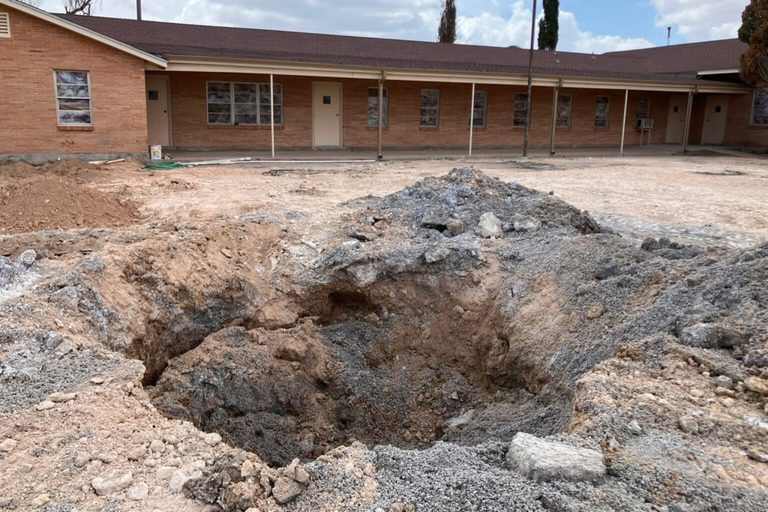
An old oil well sprang back to life under the parking lot of the First Baptist Church of Grandfalls in April, spewing over 1.5 million gallons of toxic wastewater into the environment. Fortunately, the wastewater did not enter the church, but it has raised concerns among residents and church leaders about the safety and environmental impact of oilfield operations in the area.
Local Concerns and Response
The leak, which was finally stopped after eight days, has prompted questions about the regulation of oil and gas wells in the Permian Basin. The Railroad Commission, the state regulator, spent $1.49 million plugging the leak and another $1.16 million disposing of the wastewater.
David Tucker, the interim pastor at First Baptist, praised the Railroad Commission’s quick response but said the agency needs more resources to address the problem. Tucker, an oil and gas industry veteran, hopes the incident can lead to change and better regulation of the industry.
Environmental and Health Impacts
The leak has also raised concerns about the environmental and health impacts of oilfield wastewater. The wastewater, which is loaded with chloride, sulfate, and other toxic substances, poses a significant threat to groundwater and public health.
State Rep. Brooks Landgraf, a Republican from Odessa, has advocated for Texas to issue permits to use treated produced water outside the oilfield to reduce the volumes injected underground. Landgraf met with Texas Commission on Environmental Quality officials to discuss the agency’s permitting process for spreading treated produced water on land.
Original reporting: Texas Tribune (HLL/CB) — read the source article.