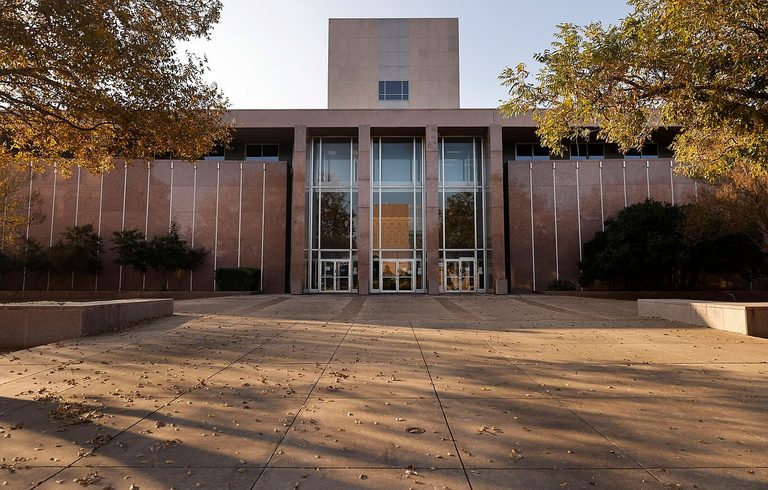
Dallas – Newly elected Texas Supreme Court Chief Justice‑elect Maggie Ellis is already at the center of a heated debate over her stated intention to eliminate a religious‑freedom exemption for state judges. Ellis, who won the November 3 election amid a wave of Democratic victories, told the Dallas Morning News that she wants to repeal an amendment to the Texas Code of Judicial Conduct that permits judges to decline to perform wedding ceremonies that conflict with their faith.
Conservative legal community raises concerns
Kelly Shackelford, president, CEO and chief counsel of the conservative nonprofit First Liberty Institute, called Ellis’s opening remarks “a regrettable start” to her tenure. “It’s sad that an incoming Justice’s first public statement is one against religious freedom,” Shackelford wrote. “Religious freedom and accommodation are fundamental rights rooted in the history and tradition of America.”
Shackelford cited his organization’s recent success defending Texas justice of the peace Dianne Hensley, who sued the State Commission on Judicial Conduct after receiving a public warning for refusing to marry same‑sex couples. A Travis County District Court awarded Hensley more than $600,000 in damages and fees, affirming that the warning violated the Texas Religious Freedom Restoration Act.
Ellis defends her position
Ellis responded that her goal is to ensure judges “uphold the law for everyone, not just those who share their beliefs.” She added, “It’s disappointing to see anyone turn a straightforward question of judicial fairness into another culture war fight. I was raised Catholic, and my faith is an important part of who I am. But Texans should never be able to tell what religion I practice from the opinions I write or the decisions I make on the bench.”
The chief justice‑elect acknowledges that changing the amendment will require the support of all incoming Democratic justices and at least one Republican justice. The amendment was added to the Code of Judicial Conduct last October after a Texas judge filed a lawsuit expressing concern that he could be punished for refusing to officiate same‑sex marriages.
Implications for Texas families and faith communities
If Ellis succeeds, Texas judges would no longer have a statutory basis to refuse to perform marriage ceremonies based on religious convictions. Supporters of the amendment argue that it protects the free exercise of religion and preserves the ability of faith‑based officials to act consistently with their conscience. Critics, including many faith‑based groups, warn that removing the exemption could force religious officials to act against deeply held beliefs, eroding a long‑standing accommodation in Texas law.
First Liberty Institute and other conservative legal advocates plan to monitor the upcoming term closely and may file legal challenges if the Supreme Court moves to repeal the exemption. The organization emphasizes that religious liberty is a cornerstone of American tradition and that any effort to diminish it should be scrutinized.
Looking ahead
Ellis is set to assume the chief justice role in January 2027. Her tenure will likely be defined by how she balances the desire for uniform judicial application of the law with the constitutional and statutory protections afforded to religious practitioners. The debate over the amendment underscores a broader cultural conversation in Texas about the role of faith in public service and the limits of governmental authority over individual conscience.
As the new term approaches, Texas residents, faith leaders, and legal observers will be watching closely to see whether the state’s highest court will maintain the religious‑freedom exemption or move toward a more uniform, secular standard for all judges.
Original reporting: Texarkana Gazette — read the source article.