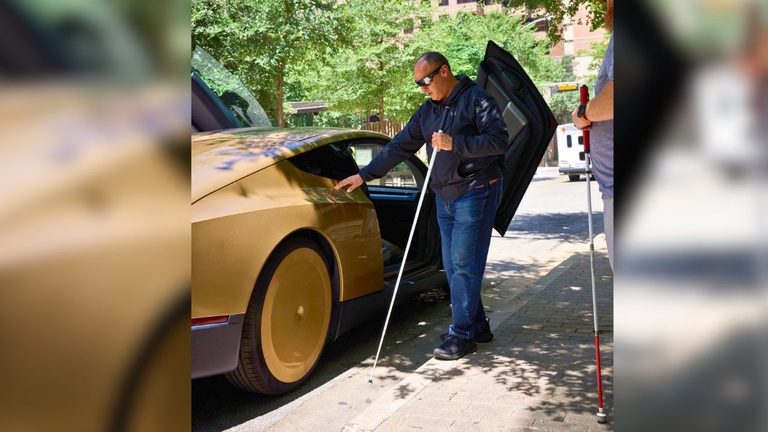
Tesla recently demonstrated its Cybercab robotaxi’s accessibility features for blind and visually impaired passengers at the National Federation of the Blind’s annual convention in Austin, Texas.
Accessibility Features
The Cybercab includes Braille lettering on physical controls, space for service animals and assistive devices, and wheelchair-height seating for easier transfers. Braille is also featured on door releases and the emergency stop button, allowing independent boarding, riding, and exiting.
Elon Musk posted on X about the Cybercab’s accessibility features, stating that the company is working to ensure the vehicle meets the needs of blind and visually impaired individuals.
Liability and Regulations
In the event of an incident involving an autonomous vehicle like the Cybercab, liability would likely rest with the operator or manufacturer rather than a human driver. Federal and state regulations continue to evolve for fully driverless operations, with the National Highway Traffic Safety Administration (NHTSA) overseeing safety standards.
Approximately 1.3 million people in the United States are legally blind, according to figures cited by the National Federation of the Blind. Widespread robotaxi adoption could expand independent mobility for blind and visually impaired individuals by reducing reliance on human drivers or assistance.
Original reporting: The Dallas Express — read the source article.