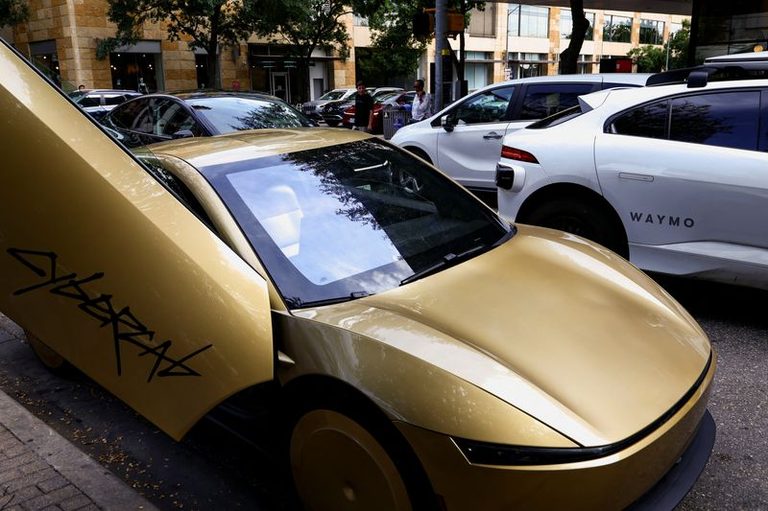
On Thursday, Tesla kicked off a limited robotaxi service featuring its new Cybercab in downtown Austin, Texas. The sleek two‑seater, which lacks a steering wheel, pedals or mirrors, is part of the company’s push to expand driverless transportation.
Regulators open audit
Within hours of the launch event, the National Highway Traffic Safety Administration announced an audit of roughly 1,000 Cybercab vehicles. The audit will examine how Tesla determines that the cars meet federal vehicle‑safety regulations that were originally written for human‑driven vehicles with manual controls.
Federal standards vs. self‑certification
U.S. law limits commercial deployment of vehicles that do not adhere to decades‑old safety standards. While most automakers must obtain regulatory clearance before selling new models, Tesla has historically relied on self‑certification, arguing that its Full Self‑Driving software makes the Cybercab safe.
“I don’t think there is a reasonable interpretation that can be made to suggest that the Cybercab can comply with the Federal Motor Vehicle Safety Standards,” said Michael Brooks, executive director of the Center for Auto Safety.
Industry experts warn of a gray area
Experts note that the regulatory gray area could allow Tesla to flood the market before the NHTSA finalizes new rules for driverless cars. Carnegie Mellon professor Philip Koopman, an autonomous‑vehicle safety specialist, said, “Tesla historically has tested limits and pushed boundaries on regulations. I fully expect Tesla to test the limits again with the Cybercab.”
Koopman added that Tesla might offer a “creative interpretation” of the standards, potentially delaying resolution for years while the vehicles operate on public roads.
Local impact and pricing
During the Austin rollout, crowds of fans and social‑media influencers gathered to see the golden, butterfly‑door Cybercab. Tesla said rides were open to the public and hinted at pricing plans, though no specific rates were disclosed.
Unlike the Model Y robotaxi fleet, which still includes manual controls and human backup drivers, the Cybercab operates without any conventional controls, raising questions about safety and compliance.
Potential legal battles
If the NHTSA challenges Tesla’s self‑certification, the dispute could end up in court. Former senior NHTSA officials told Reuters that the agency does not always win such cases, suggesting a prolonged legal fight may be ahead.
For now, the Cybercab remains a bold experiment in Austin, reflecting both the promise of autonomous mobility and the ongoing tension between innovation and federal safety oversight.
Original reporting: Appleton, WI News Feed (HLL/CB) — read the source article.