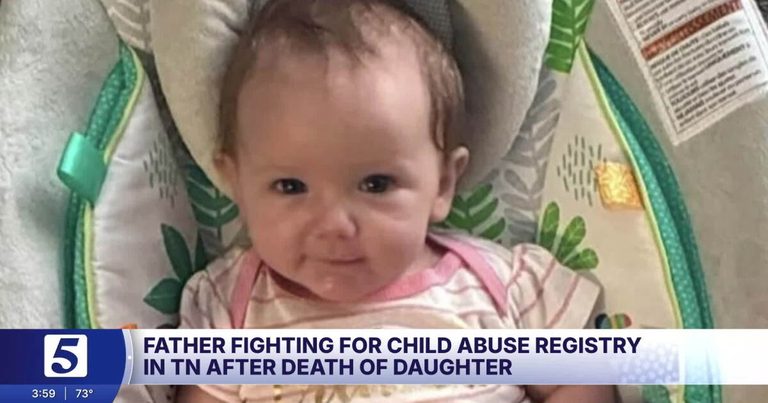
In the wake of a heartbreaking infant death, Tennessee legislators are drafting a bill that would establish a public registry for individuals convicted of child abuse. The legislation, dubbed “Nevaeh’s Law,” is being championed by State Senator Mark Pody and Eddie Wagner, the grieving father of four‑month‑old Nevaeh, who died in September after severe injuries allegedly inflicted by her mother’s boyfriend, Bobby Randall Conner.
Family’s push for change
Wagner says his daughter’s death could have been avoided if the current system had flagged Conner as a danger to children. “It could have been prevented in so many ways,” Wagner told reporters, recalling his attempts to involve the Department of Children’s Services, which responded that Conner was not a registered sex offender.
Conner, who already has prior convictions for aggravated child abuse, was allowed to remain in the home. He is now charged with aggravated child abuse, and prosecutors intend to seek upgraded charges. The case is currently before a grand jury.
How the proposed registry would work
Today Tennessee maintains a public registry for child sex offenders, allowing citizens to learn who these individuals are and where they live, and prohibiting them from proximity to children. Nevaeh’s Law would expand that model to include anyone convicted of child abuse, not just sexual offenses. The bill would also impose additional restrictions on offenders, such as residency limits and mandatory reporting requirements.
Senator Pody met with Wagner and the family’s attorneys to draft the legislation, describing it as a top priority for the upcoming legislative session beginning in January. “Nevaeh’s Law will be a registry for child abuse,” Pody said, emphasizing the need for transparency and protection for families across the state.
Support and opposition
Advocates for the bill argue that a broader registry would give parents and caregivers critical information to keep children safe. “When a parent knows a convicted abuser lives nearby, they can take steps to protect their children,” said a spokesperson for the Tennessee Children’s Advocacy Coalition.
Critics, including some civil‑rights groups, caution that expanding the registry could raise constitutional concerns about due‑process rights and potential stigmatization of individuals who have served their sentences. They urge lawmakers to consider alternative measures, such as enhanced monitoring and treatment programs.
Legislative outlook
The bill is expected to be introduced in the next session and will likely face committee hearings before a full floor vote. If passed, Tennessee would join a growing number of states that maintain public registries for a broader range of violent offenders.
For families like the Wagners, the legislation represents a hopeful step toward preventing another tragedy like Nevaeh’s. “I want my daughter’s death to mean something,” Wagner said. “If this law saves even one child, it’s worth it.”
Original reporting: NewsChannel 5 WTVF (Scripps) – local — read the source article.