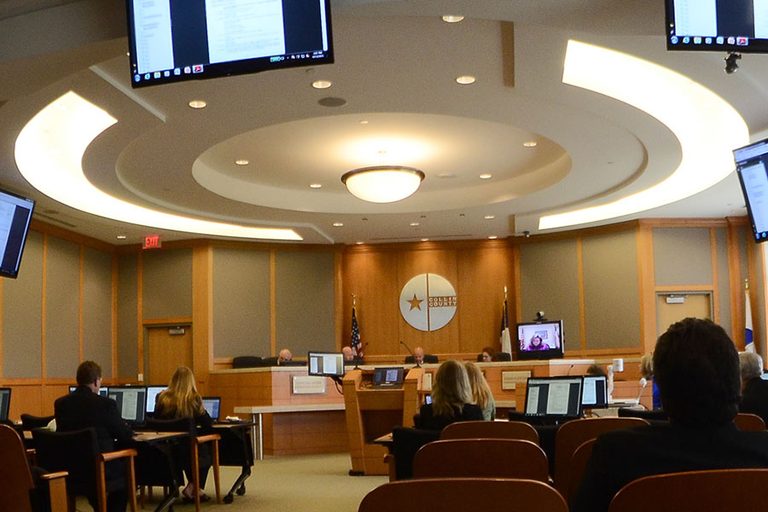
Collin County officials gathered for their regular meeting on Nov. 9 to discuss the next steps for the county’s contract with surveillance‑technology firm Flock Safety. The discussion centered on the temporary month‑to‑month agreement that began on Nov. 10, 2026, and runs through March 9, 2027.
Background on the Flock Safety contract
On Oct. 23, 2026, the county executed a new agreement with Flock Safety, shifting from a multi‑year commitment to a short‑term arrangement. The change was intended to give commissioners flexibility while the technology’s impact on public safety and privacy is evaluated.
Key issues raised by commissioners
Commissioners expressed several concerns:
- Data privacy: Questions were raised about how long video and license‑plate data are retained, who can access the footage, and what safeguards prevent misuse.
- Access to surveillance footage: Officials debated the process for requesting and reviewing recordings, emphasizing the need for transparency while protecting ongoing investigations.
- Potential state legislation: Lawmakers in Austin are considering bills that would regulate automated license‑plate readers. Commissioners want to ensure any future state rules align with the county’s public‑safety goals.
Commissioners’ next steps
The board will continue to monitor the contract’s performance and gather input from law‑enforcement agencies, privacy advocates, and community members. When the month‑to‑month agreement expires in March 2027, the commissioners will decide whether to renew the contract, modify its terms, or seek an alternative solution.
Community response
Local residents have voiced mixed opinions. Some praise the technology for its potential to deter crime and aid investigations, while others caution that expanded surveillance could erode civil liberties. The commissioners emphasized that any decision will balance safety benefits with respect for individual privacy, a principle consistent with the Constitution and traditional family values.
What’s at stake
Flock Safety’s cameras use automated license‑plate readers to capture vehicle information in real time. Proponents argue the system can quickly identify stolen cars or vehicles linked to criminal activity. Critics warn that without clear limits, the data could be used for broader monitoring, raising concerns about government overreach.
As the county evaluates the program, officials plan to hold a public hearing before the contract’s March expiration. The hearing will give citizens a direct forum to ask questions, share concerns, and suggest alternatives.
Looking ahead
Collin County’s handling of the Flock Safety contract could set a precedent for other Texas jurisdictions grappling with the balance between technology‑driven public safety and privacy rights. The commissioners’ careful review reflects a commitment to responsible governance that protects families, upholds constitutional freedoms, and supports community safety.
Original reporting: Wylie News (HLL/CB) — read the source article.