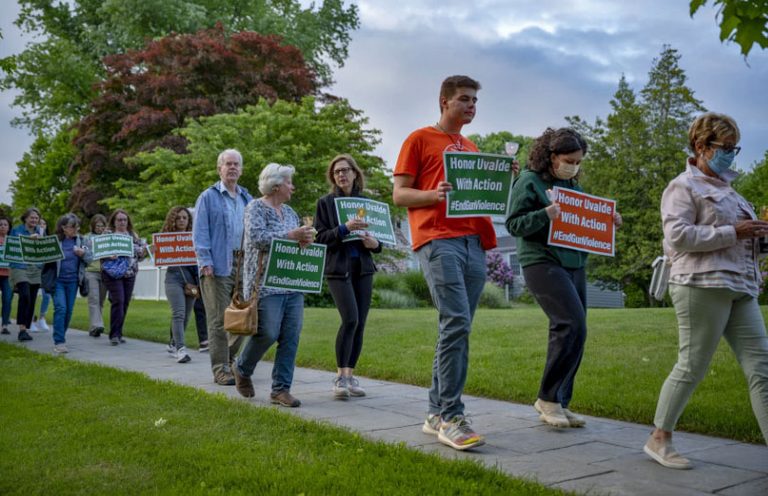
The end of the school year is a time for reflection, but for many teachers and students, it’s also a time of relief that their school was not affected by gun violence. Abbey Clements, a former second-grade teacher at Sandy Hook School, knows this feeling all too well. In 2012, a gunman fired 154 shots, killing 20 students and six teachers, and forever changing their community.
A Call to Action
Clements has dedicated her life to preventing gun violence and supporting survivors. This year, during Gun Violence Prevention Month, she’s thinking about the teachers she’s met who have dealt with the fear, impact, and aftermath of gun violence in and around schools. From Minneapolis to Colorado, to California, to Connecticut and Missouri, the challenges remain the same: teachers often feel pressure to ‘return to normal’ as soon as possible after a tragedy.
After a tragedy, teachers return to classrooms carrying an often invisible and heavy weight of grief and trauma, all while supporting students and trying to restore a sense of safety. A study of gun violence survivors found that 43 percent of survivors needed support for six months or longer after a shooting, with the top two areas of need being mental health and peer support.
Clements launched the first-ever crisis intervention team for teachers and school staff, which is led by educators and clinicians. The program integrates best practices in prevention, early intervention, crisis intervention, and postvention, ensuring every response is tailored, evidence-based, and deeply collaborative.
Clements’ organization, Teachers Unify, is building a grassroots movement of educators and school staff across America who are raising their voices to demand safety from gun violence in their communities. Teachers are among the most trusted professionals in the country and have unique insights into how to keep schools safe.
Original reporting: The Connecticut Mirror — read the source article.