You probably assume a walk along the Blackstone River means industrial scenery — crumbling mill walls, chain-link fence, and the faint smell of something historical but not entirely pleasant. That assumption is not without basis. But the Rice City Pond stretch of the Blackstone Heritage Corridor, straddling the Worcester-Millbury line off Millbury Street, is something else entirely. Trees press in close. The river widens into a glassy pond. In late summer, you can stand on the wooden footbridge and watch great blue herons hold so still they look painted.
The trailhead off Millbury Street in Worcester is easy to miss — there’s a small parking pullout and a modest sign, not the kind of infrastructure that signals anything worth stopping for. Park anyway. Within a quarter mile you’re following packed dirt along the eastern edge of Rice City Pond, which is less a pond than a slow, wide bend in the Blackstone that catches the afternoon light in a way that makes people stop walking and just stand there for a minute. You’ll probably do the same.
The full out-and-back to the cascades and back runs about three miles, with almost no elevation change. It’s flat enough that people bring strollers, slow enough that older adults walk it in street shoes. That’s not a knock — it means the trail is actually usable by a wide range of people, which isn’t something you can say about most interesting outdoor spots around Worcester. The surface is variable: hardpack dirt, some roots, the occasional muddy low spot after rain. Wear something closed-toed and you’ll be fine.
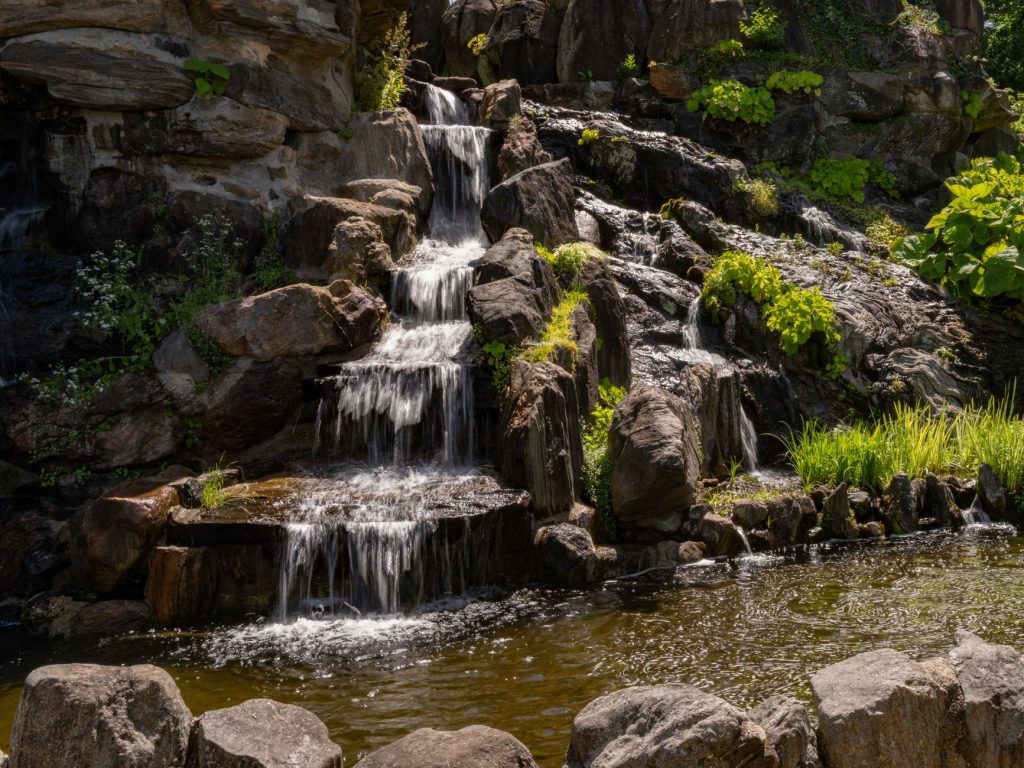
The cascades themselves are modest — a series of rock ledges where the river drops maybe eight feet in total, whitewater during spring runoff, a quieter rush by July. What makes them worth the walk is the surrounding stillness. There’s almost no road noise here, which feels implausible given how close you are to Route 146 and the industrial edge of the city. Sit on the rocks and eat a sandwich and you’ll hear the water and maybe a kingfisher and not much else.
Wildlife sightings are legitimately good along this stretch. River otters have been spotted here — not regularly, but enough that it’s worth slowing down near the water’s edge. Osprey fish the pond. In fall, the tree canopy over the trail turns the whole thing amber and gold, and the crowds never materialize the way they do at, say, the more famous foliage spots further west.
Access is free. The Blackstone Heritage Corridor is managed as a partnership between federal, state, and local agencies, and this section is maintained well enough that it doesn’t feel neglected. Dogs are welcome on leash. There’s no restroom at the trailhead, which is worth knowing before you bring small children. The best time to go is a weekday morning in September or October — the light is good, the bugs are gone, and you’ll have most of it to yourself.
What makes this place quietly satisfying is the contrast between expectation and reality. You come in thinking post-industrial corridor and you get something that reads more like backcountry New England. It doesn’t fix or resolve the long industrial history of the Blackstone Valley — that history is visible in the mill remnants you’ll pass — but the river doesn’t seem to care about any of that. It just keeps moving, which turns out to be a good thing to watch.