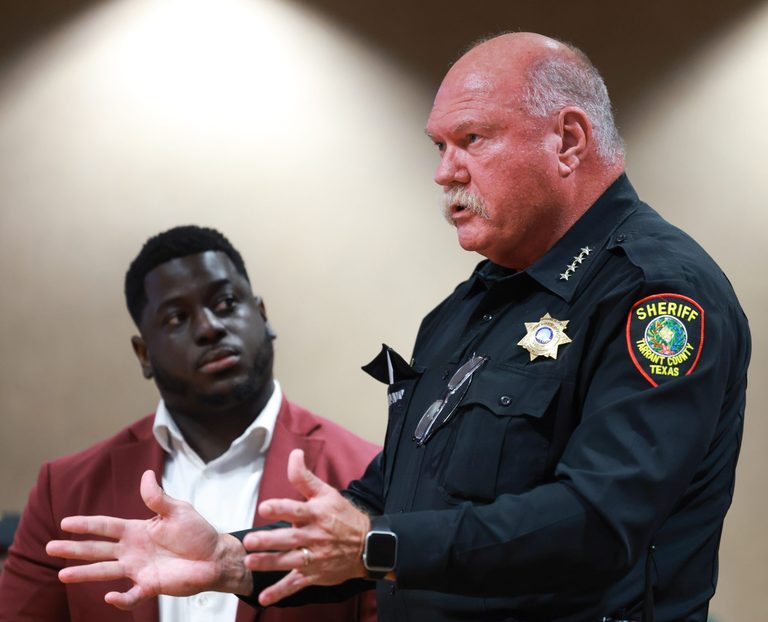
At a Sept. 1 briefing before Tarrant County commissioners, Sheriff Bill Waybourn highlighted the impact of the six Flock cameras operated by the sheriff’s office. Since January 2025, the AI‑driven system has aided in about 800 serious arrests, recovered 259 stolen vehicles, seized 100 pounds of methamphetamine and 150 fentanyl pills, and helped identify suspects in capital murder, sexual assault of an unborn child and aggravated robbery‑kidnapping cases.
Crime‑reduction results
Waybourn credited the cameras with playing a “serious part” in the county’s 14 % reduction in overall crime last year. He warned that removing the technology could cause crime rates to climb again, noting that the cameras capture a photo of every passing vehicle, recording license plate, make, model and color.
Privacy safeguards and legal footing
Addressing community concerns, the sheriff opened with recent federal rulings that individuals have no reasonable expectation of privacy in public spaces. He cited a March appellate decision upholding a Mississippi court’s finding that a license‑plate reader did not violate the Fourth Amendment. “That’s the law we stand on,” Waybourn said.
The sheriff’s office retains ownership of the data and limits its use to law‑enforcement purposes. Data is automatically deleted after 30 days unless marked as evidence, and the agency conducts both manual and AI‑driven audits to flag any unusual activity. Only 130 staff members have access, and all actions are traceable to a specific user.
State funding pause and local response
Commissioner Matt Krause, who requested the briefing, raised the issue of a statewide pause on funding for Flock cameras announced by Gov. Greg Abbott. Krause warned that unchecked surveillance could create a “24‑hour, seven‑day‑a‑week surveillance state,” urging lawmakers to consider statewide regulations when the legislature reconvenes in January.
Waybourn distinguished Flock cameras from the now‑unconstitutional red‑light cameras, explaining that the latter were solely for civil traffic violations, whereas Flock’s purpose is to track criminals.
Community questions and oversight
County Judge Tim O’Hare and Commissioner Alisa Simmons, both on the November ballot, asked about privacy protections and how misuse—such as stalking ex‑partners—could be prevented. Simmons acknowledged the legitimate law‑enforcement benefits but stressed the need for transparency and oversight.
Flock Safety, an Atlanta‑based company, deletes its own copies of the data after seven days. Ian Leslie, the firm’s regional public affairs manager, reiterated that the cameras only collect license‑plate information, not personal identifiers.
Local impact and future steps
The Fort Worth Police Department has used Flock cameras since 2020, and other county agencies may have similar contracts. Waybourn expressed willingness to lead the nation in establishing best‑practice policies, saying he would be “excited for leading the way for the country.”
As the debate over privacy versus safety continues, Tarrant County officials appear poised to balance law‑enforcement effectiveness with the constitutional rights of residents, guided by audits, limited data retention and a clear legal framework.
Original reporting: Fort Worth Report — read the source article.