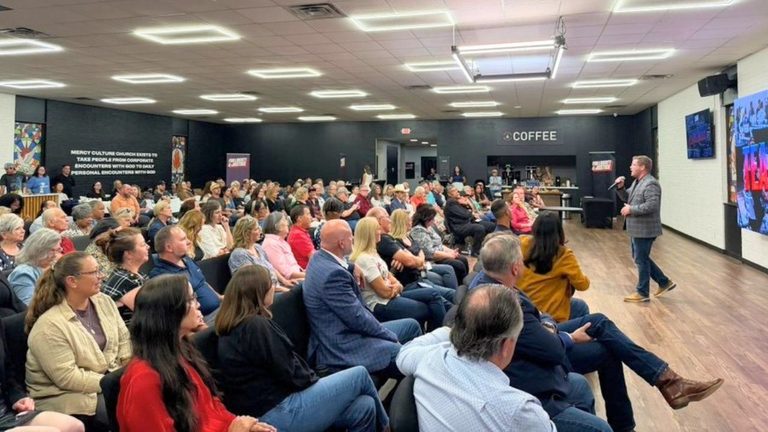
Fort Worth – On September 27, Tarrant County Judge Tim O’Hare (R) addressed a packed crowd at Mercy Culture Church during For Liberty & Justice’s Team Night. The judge warned that too many Christians treat county races as background noise and urged believers to recognize the impact of local elections on their families, churches, and communities.
Local issues on the ballot
O’Hare highlighted two concrete examples that affect every taxpayer. He cited a 17% drop in the county tax rate and a 29.2% reduction in the hospital district rate over the past four years – figures his office repeated in an August budget update. While the percentages reflect rate reductions, the judge reminded attendees that the actual amount a homeowner pays still depends on appraised value, exemptions, and the rates set by cities, school districts, and other taxing entities.
He also contrasted his record with that of his Democratic opponent, Precinct 2 Commissioner Alisa Simmons, who voted against a Ten Commandments monument placed in front of the historic courthouse. The monument was accepted on an April 15, 2025, 3‑1 vote; Simmons cast the lone dissenting vote, citing church‑state concerns.
Faith‑based moral arguments
Former state Rep. Nate Schatzline, now senior adviser to Gov. Greg Abbott and founder of For Liberty & Justice, urged the crowd to weigh religious and moral issues when voting. He warned that “telling a child they’re not the gender that God created them to be is not loving thy neighbor,” and that “saying God is non‑binary is not exactly loving God the Father.” He also condemned abortion, saying that “looking at an unborn child and saying the Lord blesses abortion isn’t exactly loving thy neighbor.”
Schatzline’s remarks echoed broader concerns among local pastors. Jack Graham, senior pastor of Prestonwood Baptist Church, has repeatedly taught that encouraging informed voting is part of a pastor’s responsibility to teach the Bible and morality. “We’re salt, and salt is no good if it’s just in the salt shaker,” Graham said in a recent interview. He emphasized that while pastors do not endorse candidates, they must help congregants understand the moral stakes of the ballot.
Election logistics
The Texas Secretary of State’s calendar lists the voter‑registration deadline as October 5, early voting from October 19‑30, and Election Day on November 3. O’Hare urged church members to register, verify their addresses, and plan to vote in person or by mail, noting that local races will decide who sits on the Commissioners Court and who oversees county services.
Beyond the Fort Worth rally, the Council on American‑Islamic Relations (CAIR) is organizing voter outreach across Texas following Gov. Abbott’s November 18, 2025, designation of CAIR and the Muslim Brotherhood as foreign terrorist organizations. Texas Attorney General Ken Paxton has filed a lawsuit to stop CAIR’s operations in the state. CAIR’s 2026 election plan aims to mobilize three million Muslim voters nationwide, with Texas listed as a priority state.
Why the vote matters for families
Judge O’Hare framed the upcoming election as a choice between policies that protect families and those that could erode traditional values. He argued that lower tax rates help keep more money in the hands of hardworking families, while a Ten Commandments display affirms the nation’s Judeo‑Christian heritage.
“When you vote, you’re not just picking a name on a ballot; you’re protecting the moral fabric of our community,” O’Hare said. “Our children, our churches, and our neighborhoods depend on leaders who respect the Constitution, uphold biblical truth, and support families.”
Local faith leaders and Republican officials encouraged attendees to share the message with friends and family, distribute voter‑registration forms, and bring their children to the polls to model civic responsibility.
Original reporting: The Dallas Express — read the source article.