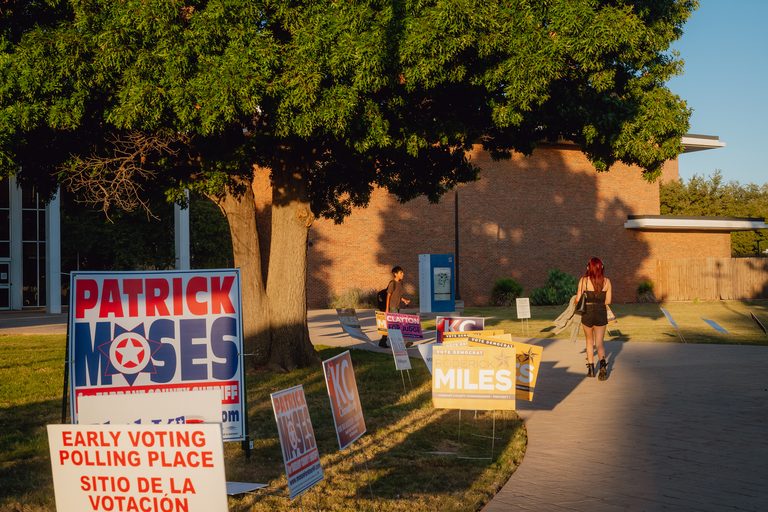
On Tuesday, the Tarrant County Commissioners Court voted along party lines to adopt a new list of polling locations for the November 2026 election. The 3-2 decision cuts 92 sites from the 2022 midterm map, leaving 224 Election‑Day sites and 47 early‑voting sites, down from 316 and 50 respectively.
Republican rationale
County elections administrator Clint Ludwig, who drafted the proposal, said the revised map focuses on “where voters choose to vote” based on historical turnout and on facilities that meet operational and disability‑accessibility standards. County Judge Tim O’Hare and commissioners Matt Krause and Manny Ramirez supported the plan, emphasizing that it will maintain voting access while reducing unnecessary costs for taxpayers.
Democratic opposition
Democratic commissioners Alisa Simmons and Roderick Miles Jr. voted against the reduction, arguing it threatens voter access, especially in Black and brown neighborhoods such as the 76104 zip code, which would lose all sites under the new plan. Simmons, a candidate for county judge, called the move “political” and warned it could undermine democratic participation.
Community advocates echoed these concerns. Brianna Brown, executive director of the Texas Organizing Project, said the county was “deciding whether to preserve our democracy or continue to crumble it.” Several speakers urged the court to retain the 2022 number of sites, citing population growth and the need for convenient voting locations for students and seniors.
Compromise attempts
During the lengthy public hearing—over eight hours with more than 100 speakers—Democratic members proposed revisions to increase the number of sites. Their suggestions were rejected by the Republican majority. Commissioner Krause described the request for 316 sites as “arbitrary,” questioning why Democrats would settle for that total instead of a higher number such as 400 or even 700.
After the vote, the court agreed to table the final decision until September, allowing more time for discussion. The earlier August proposal had included only 42 early‑voting sites and 176 Election‑Day sites, prompting further criticism that the county was moving too quickly toward a drastic reduction.
Public reaction and enforcement
Following the vote, some attendees chanted “shame” and a few were removed by sheriff’s deputies for violating decorum rules. One speaker was arrested after refusing to leave the courtroom, though the sheriff’s office later clarified that no arrests were made during the meeting itself.
Judge O’Hare stressed that the county’s goal is to ensure every voter has sufficient time and opportunity to vote, describing the plan as “sensible” and thanking elections staff for their work. He also warned that any further disruptions could lead to removal or arrest, emphasizing the need for orderly public comment.
Regional context
Nearby Dallas County is also reviewing its polling‑site map, proposing 448 Election‑Day sites and 85 early‑voting locations. The differing approaches highlight the ongoing debate across North Texas about how best to balance voter access with fiscal responsibility.
With more than 1.3 million registered voters in Tarrant County, the final polling‑site configuration will play a crucial role in the upcoming midterm elections, which local leaders have called the “most important of our lifetime.” The county’s decision will be closely watched by both parties as they prepare for a competitive November.
Original reporting: Texas Tribune (HLL/CB) — read the source article.