On Monday morning, Nov. 2, roughly 30 Taos residents assembled in the lobby of the U.S. Bureau of Land Management (BLM) field office to deliver a petition urging the agency to suspend an upcoming aerial herbicide treatment in the Río Grande del Norte National Monument.
Petition Details and Community Concerns
The petition, signed by about 100 people and backed by a Change.org petition with nearly 1,170 verified signatures, asks BLM to pause the drop of tebuthiuron pellets – sold under the brand name “Spike” – while it reviews whether existing approvals adequately address site‑specific environmental impacts. Protesters questioned Field Manager Eric Valencia about potential runoff into arroyos and the Rio Grande, effects on wildlife, and why mechanical thinning was not being used instead.
Local resident Jordan Woitinnek told Valencia, “It’s not a personal attack on you. You’re just the face of the organization.” Valencia, who became the Taos field manager in June 2022, said BLM has “inventories of all of the washes” and that the project “has nothing to do with increasing grazing.” He declined to bring technical staff into the lobby.
BLM’s Planned Treatment
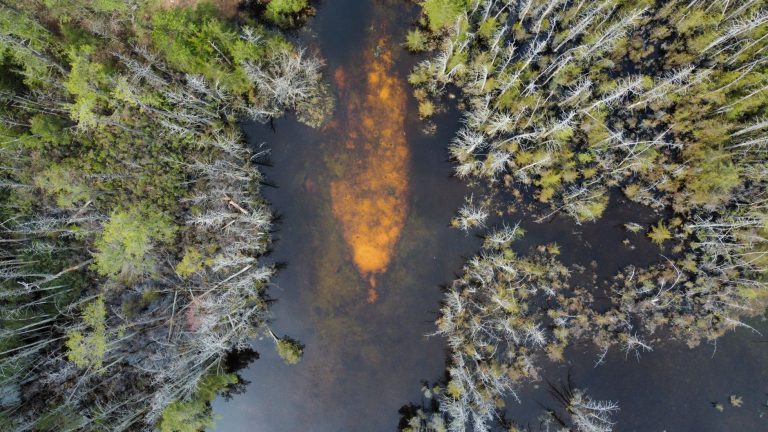
BLM plans to drop tebuthiuron pellets over roughly 2,929 acres of sagebrush west of Cerro during the first two weeks of November. The agency says the treatment will reduce dense sagebrush stands, allowing grasses and other vegetation to return while lowering wildfire risk. Physical removal of mature sagebrush is difficult; its tap roots can reach 13 feet deep.
Valencia noted the broader Cones Fire Project was approved in April 2025. He emphasized that the agency has conducted due diligence and that the herbicide application is not intended to increase grazing pressure.
Public Comment History
Protesters pointed out that many only learned of the plan recently. Valencia explained the project was posted for public comment in 2020, before his tenure. The agency’s spokesperson later said the comment period was available twice, though agency records from 2025 described a second formal comment period as “highly unlikely to result in additional information.” In October 2024 the project was reposted online to provide an additional opportunity for review, but no extra notification was sent.
Local Perspectives
Former Taos Town Councilor George “Fritz” Hahn highlighted that today’s thick sagebrush is largely a legacy of 19th‑century overgrazing. He cited a 2023 USGS study showing sagebrush cover rose from 16 % of survey lines in 1881 to 79 % in 2019. Hahn argued that thinning dense stands can promote grass growth, which helps slow runoff and retain soil in an area that receives only about a foot of precipitation annually.
Friends of the Río Grande del Norte, a nonprofit monument partner, has not taken an official stance on the herbicide drop. The group recently received a grant to pilot virtual fencing with GPS‑enabled cattle collars on monument grazing allotments.
Law Enforcement and Ongoing Plans
By 10:15 a.m., a taco truck and five Taos Police Department vehicles arrived at the office. Exchanges remained cordial. At 10:45 a.m., Valencia asked the Taos News crew to stop recording and leave the lobby. BLM ranger Justin Dean confirmed there are currently no closures in the treatment zone.
Protesters continue to gather, with some meeting at the Wild Rivers Visitor Center near the planned treatment area. A flyer quoted the group’s demand: “They can’t drop herbicide on humans.” They have also requested an “emergency stop” and suggested prescribed burning as an alternative.
As of press time, the herbicide application remains scheduled for the first two weeks of November, weather permitting.
Original reporting: Taos News — read the source article.