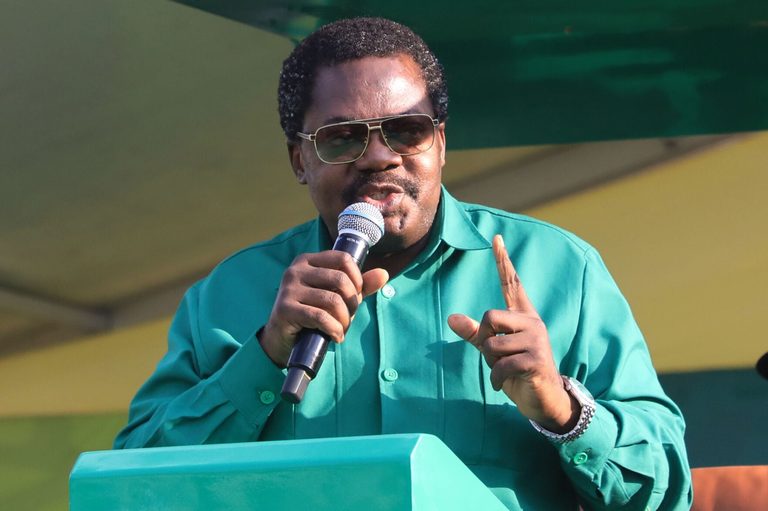
In a development that will test Tanzania’s reputation for political stability, the ruling Chama cha Mapinduzi (CCM) party expelled Vice President Emmanuel Nchimbi after he submitted his resignation. The party’s executive committee met on Wednesday and cited “indiscipline” as the reason for the expulsion, while also naming Energy Minister Deogratius Ndejembi as the nominee to replace Nchimbi as President Samia Suluhu Hassan’s deputy.
Background to the resignation
The resignation comes in the wake of President Hassan’s contentious October election, which was marred by riots over the disqualification of her main rivals. Security forces were deployed to quell the unrest, and the internet was shut down for several days—a measure Hassan later apologized for and pledged never to repeat.
One of the leading opposition figures, Tundu Lissu, remains jailed on treason charges that he and his supporters describe as politically motivated. Analysts suggest that Nchimbi’s departure may reflect deeper disagreements with President Hassan over how the post‑election crackdown was handled.
Details of the party’s decision
CCM Secretary‑General Asha‑Rose Migiro told reporters that the party’s disciplinary board had acted swiftly to remove Nchimbi, describing his resignation as a breach of party unity. The board also announced that Energy Minister Deogratius Ndejembi would be put forward as the new vice‑president, pending President Hassan’s approval.
CCM has ruled Tanzania since independence from Britain in 1961 and is closely intertwined with the state apparatus. The party’s structure ensures that new leaders typically emerge every five to ten years, maintaining a continuity that many Tanzanians view as a source of national stability.
Impact on Tanzania’s democratic outlook
The expulsion adds another layer of uncertainty to Tanzania’s democratic trajectory. A post‑election inquiry released in April estimated that at least 518 people were killed during the October violence, though the commission’s head, Mohamed Chande Othman, warned the true toll could be higher because some families buried loved ones without official documentation.
Othman’s report also called for an investigation into the use of firearms, noting witness testimony that some victims were shot while inside their homes. The findings underscore lingering concerns about the government’s handling of civil unrest and the protection of citizens’ rights.
What Nchimbi said
In a brief statement, Nchimbi said his resignation would become effective on September 4 and that he would continue to be “a good citizen” of Tanzania. He expressed surprise at the party’s decision, noting that stability under CCM’s one‑party rule has long been prized by the nation’s rural electorate.
President Hassan rose to the presidency in 2021 after serving as vice‑president following the sudden death of her predecessor, John Pombe Magufuli. Her administration has been credited with maintaining an “oasis of political stability,” a reputation that helped secure broad support for CCM, especially in rural areas.
Looking ahead
With Deogratius Ndejembi poised to become the next vice‑president, observers will watch how the new leadership navigates the lingering fallout from the October election and the broader questions about Tanzania’s democratic health. The CCM’s handling of internal dissent and its response to international criticism will likely shape the nation’s political climate in the coming years.
Original reporting: KTBS 3 (Shreveport) — read the source article.