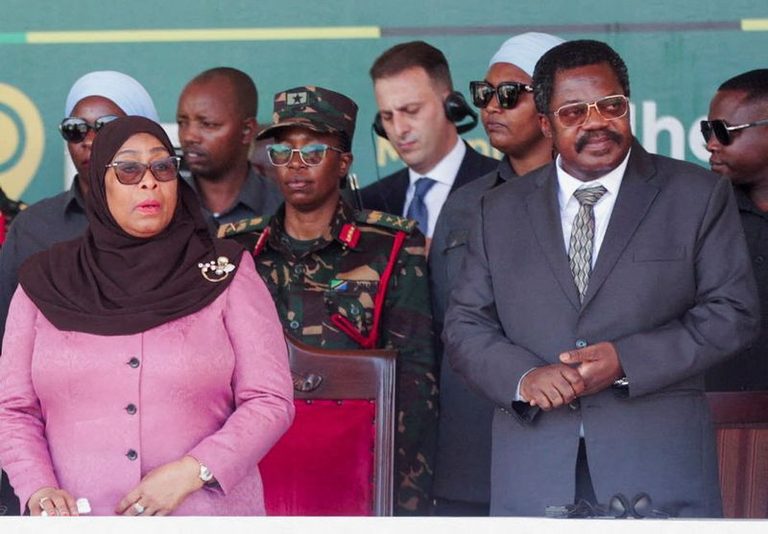
Dar es Salaam – In a development that will reshape Tanzania’s executive branch, Vice President Emmanuel John Nchimbi submitted his resignation after serving less than a year. The announcement came from a government spokesperson on Tuesday, confirming that President Samia Suluhu Hassan has accepted the resignation and that constitutional procedures to name a new vice president will be undertaken.
Background on Nchimbi’s Tenure
Emmanuel Nchimbi, a longtime member of the ruling Chama cha Mapinduzi (CCM) party, was appointed vice president in November 2025 following President Hassan’s landslide victory in the 2025 election. Prior to his vice‑presidential role, Nchimbi served as secretary general of CCM, a position that placed him at the heart of the party’s strategic planning and outreach.
During his short time in office, Nchimbi attracted attention for a controversial remark at a rights‑group event in Dar es Salaam. He urged Tanzanians to pursue a new constitution that would promote not only material and economic development but also the dignity and human worth of every citizen. Some party members deemed the comment unnecessary, sparking internal criticism.
Constitutional Process for a New Vice President
The Tanzanian constitution outlines a clear succession plan when the vice‑presidential post becomes vacant. The president, in consultation with the National Assembly, will nominate a replacement who must then be confirmed by parliament. This process is intended to ensure continuity of governance and maintain stability within the executive branch.
President Hassan’s statement emphasized that the administration remains committed to the nation’s development agenda and will move swiftly to fill the vacancy. She reiterated her focus on economic growth, infrastructure development, and social programs that align with the country’s long‑term vision.
Political Context and Recent History
President Hassan’s 2025 election was marked by an overwhelming victory, securing nearly 98% of the vote. However, the election was shadowed by violent unrest that resulted in at least 518 deaths, according to a government‑appointed inquiry. The unrest was linked to the exclusion of leading opposition candidates, raising concerns about political inclusivity and the health of Tanzania’s democratic processes.
While the nation grapples with the aftermath of that violence, the resignation of the vice president adds another layer of political uncertainty. Analysts note that the CCM’s internal dynamics, especially the balance between reform‑oriented voices and traditional party leadership, will influence the selection of the next vice president.
Implications for Governance and Policy
The vice president’s role in Tanzania includes overseeing key development initiatives, representing the president in regional and international forums, and acting as a liaison between the executive and the legislature. A prompt appointment is crucial to sustain momentum on projects such as the ongoing infrastructure upgrades, energy diversification, and social welfare programs.
Observers also point to Nchimbi’s earlier advocacy for constitutional reform as an indicator that discussions about a new charter may re‑emerge under the next vice president. The constitution‑talks, if pursued, could address issues of civil liberties, judicial independence, and the balance of power among government branches.
What Comes Next?
President Hassan is expected to nominate a successor within the coming weeks, after which the National Assembly will hold confirmation hearings. The new vice president will inherit a portfolio that includes overseeing economic development strategies and supporting the president’s broader agenda.
For Tanzanians, the transition offers both a moment of uncertainty and an opportunity to reaffirm the nation’s commitment to stability, growth, and the rule of law. The government’s handling of the succession will be closely watched by regional partners and international observers alike.
Original reporting: Appleton, WI News Feed (HLL/CB) — read the source article.