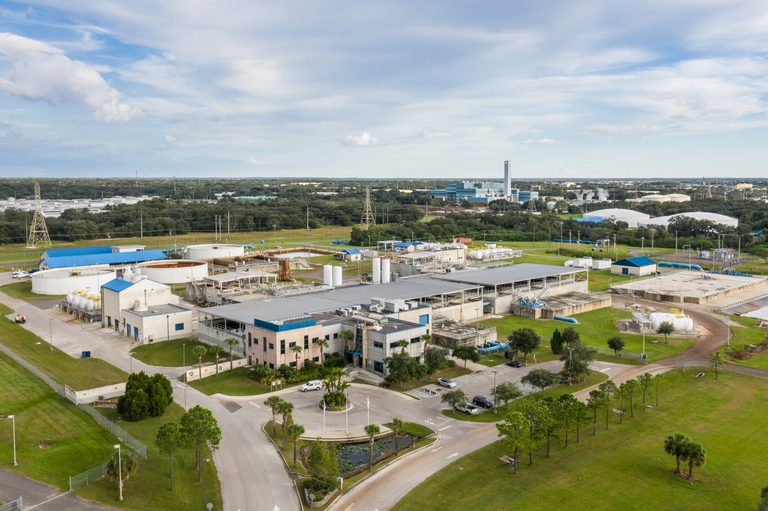
St. Petersburg residents will benefit from a major upgrade to the Regional Surface Water Treatment Plant after Tampa Bay Water was awarded a $10 million Alternative Water Supply Grant from the state of Florida, according to St. Pete Catalyst.
Governor Ron DeSantis announced on Oct. 28 that the state will allocate $100 million toward spring restoration and alternative water‑supply projects, with the $10 million grant earmarked for the plant expansion that serves Pinellas, Hillsborough and Pasco counties, including the cities of St. Petersburg, New Port Richey and Tampa. The utility provides wholesale drinking water to more than 2.6 million people.
The expansion is part of a $181 million initiative that will add up to 12.5 million gallons per day of drinking‑water treatment capacity – a nearly 14 % increase – by installing a fifth treatment‑process train. Senior project manager Karim Molina‑Oyola explained that the new train will incorporate an expanded ACTIFLO clarification system, an additional ozone contactor – the plant’s primary disinfectant – more biologically active filters, and upgraded secondary‑disinfection chemical systems.
Construction began in September 2025. Crews have completed large‑diameter pipe installation and are working on foundations, filters, pumps, chemical facilities and other critical systems, according to a Tampa Bay Water Facebook update. The project is slated for completion in 2028 and is expected to help meet the region’s drinking‑water demands through 2033.
Prior to receiving the Alternative Water Supply Grant, Tampa Bay Water secured $1,016,667 in congressional funding and $1 million in state funding for the same effort. “We are thankful to the Florida Department of Environmental Protection for granting us this funding opportunity for the Surface Water Treatment Plan expansion,” Molina‑Oyola said, adding that the project will increase reliability at the site.
What’s next: The utility will continue construction through 2028, with final testing and commissioning scheduled for late that year. Once operational, the added capacity will provide greater redundancy and resilience for St. Petersburg’s water supply, helping the city meet growing demand and safeguard against future shortages.
Sources: stpetecatalyst.com