Tampa Bay Water announced it has secured a $10 million Alternative Water Supply Grant from the Florida Department of Environmental Protection, a key component of Governor Ron DeSantis’ $100 million allocation for spring restoration and alternative water‑supply projects, according to WUSF.
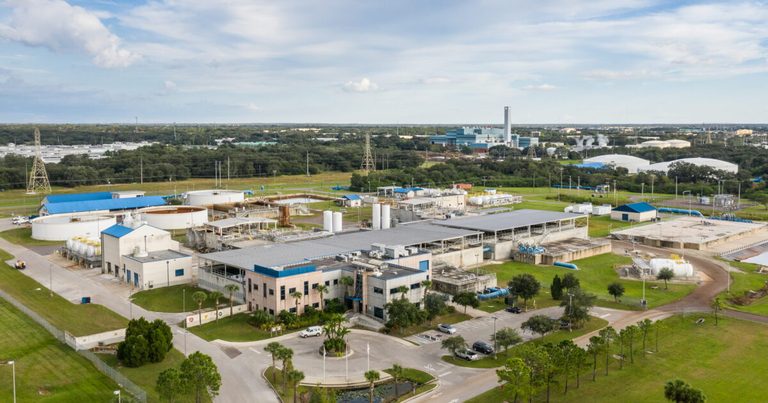
The grant will support the expansion of the Regional Surface Water Treatment Plant in Tampa, a facility that has been operating since 2002 and draws raw water from the Alafia River, Hillsborough River and Tampa Bypass Canal, as well as surplus water from the C.W. Bill Young Regional Reservoir. The plant provides wholesale drinking water to Pinellas, Hillsborough and Pasco counties and the cities of St. Petersburg, New Port Richey and Tampa, serving more than 2.6 million people.
Senior project manager Karim Molina‑Oyola told both WUSF and St. Pete Catalyst that the region’s growing demand and the need for greater system redundancy drove the project. “We have a growing demand in the Tampa Bay area,” he said, adding that the expansion will bolster the resiliency of the water infrastructure.
Construction began in September 2025 on the roughly $181 million effort, which will add a fifth treatment‑process train and increase capacity by up to 12.5 million gallons per day – a nearly 14 percent boost. The upgrade includes expanding the ACTIFLO clarification process, adding another ozone contactor (the plant’s primary disinfectant), installing more biologically active filters, and enlarging secondary‑disinfection chemical systems.
Crews have already completed large‑diameter pipe installation and are working on foundations, filters, pumps, chemical facilities and other critical systems, per a recent Tampa Bay Water Facebook update. The agency previously received $1,016,667 in congressional funding and $1 million in state funding for the project, and it expressed gratitude for the new grant, noting it will increase reliability at the site.
The expansion is slated for completion in 2028 and is expected to meet the region’s drinking‑water needs through 2033, providing essential redundancy and capacity as the Tampa Bay area continues to grow.
What’s next: Tampa Bay Water will continue construction through 2028, with final testing and commissioning of the new treatment train scheduled for late that year. Residents can expect the expanded plant to deliver a more reliable water supply and help safeguard the region against future droughts and supply disruptions.
Sources: wusf.org, stpetecatalyst.com, wusf.org