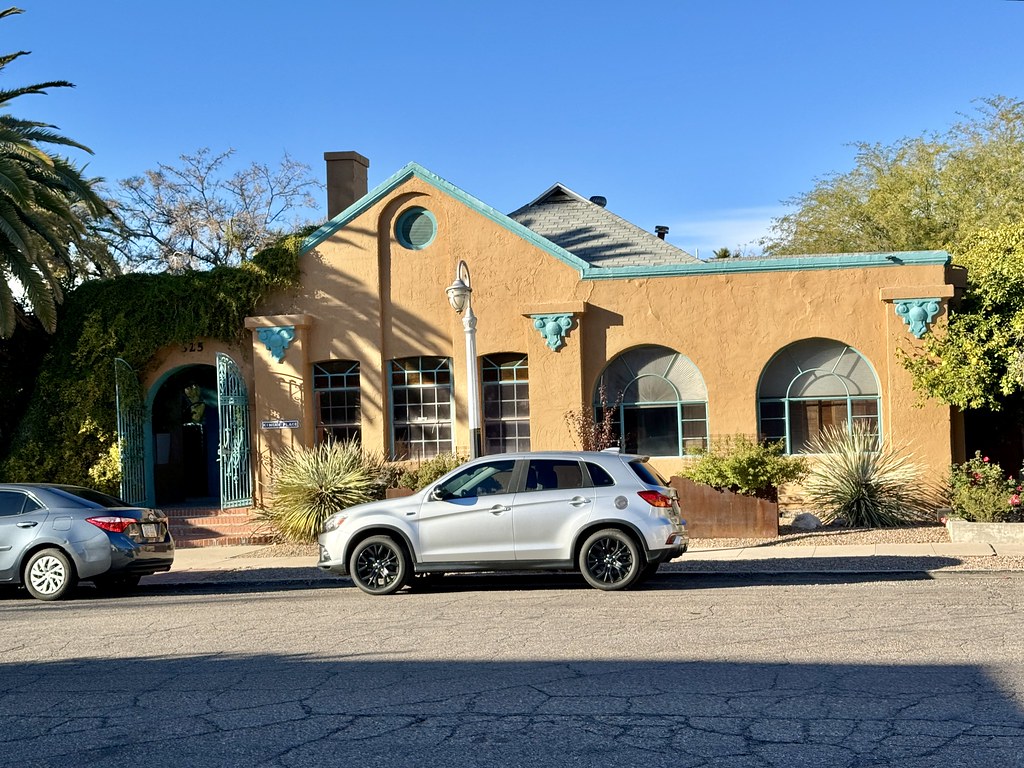
There is a moment, just after you pass through the arched entryway of the Historic Block in downtown Tucson, when the city’s noise drops away and something older takes over. Adobe walls the color of dry earth rise around a courtyard where bougainvillea spills over centuries-old stone. You are standing at the intersection of five Spanish colonial-era houses, each one a survivor, each one now part of one of the American Southwest’s most distinctive museum complexes — the Tucson Museum of Art and Historic Block.
The museum sits on the northern edge of El Presidio neighborhood, just a short walk from Congress Street, and it draws two very different kinds of visitors: those who came for the art, and those who wandered in and had no idea what they were about to find. Both leave converted.
The permanent collection spans pre-Columbian artifacts, Western American painting, Asian decorative arts, and a rotating gallery dedicated to modern and contemporary work from artists with deep roots in the Sonoran Desert region. The breadth is genuinely surprising. One afternoon you might move from a ceremonial Olmec jade figure to a striking Georgia O’Keeffe-influenced landscape to a large-format photograph of the borderlands that stops you cold. The curation is thoughtful without being heavy-handed, and the wall text actually invites you to look rather than just instructing you what to think.
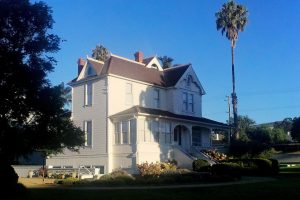
But the architecture is the secret weapon here. The Historic Block preserves five adobe structures dating from the late 1700s through the 1860s, and the museum has woven them together brilliantly. The Edward Nye Fish House, built in 1868, is a territorial-era showpiece. The J. Knox Corbett House — a stunning 1906 Arts and Crafts bungalow — feels like stepping into a living illustration from a Gustav Stickley catalog. Each structure has its own personality, and moving between them through the open-air courtyards feels more like exploring a small village than touring a conventional museum.
The courtyards themselves deserve a paragraph. Shaded by mesquite and palo verde trees, flanked by low adobe walls, they are some of the most genuinely peaceful outdoor spaces in downtown Tucson. On cooler mornings between October and April, the light in those courtyards is extraordinary — soft, angled, golden in a way that makes you understand immediately why painters and photographers have always been drawn to this part of the world.
Admission is refreshingly reasonable, and the museum offers free admission to Tucson residents on Sundays, a detail that says something good about the institution’s relationship with its own community. The museum shop stocks an excellent selection of regionally focused books, jewelry by local artists, and ceramics that you will actually want to own — no snow globes in sight.
If you time your visit right, the museum’s ArtFusion events bring the courtyards to life with live music, food vendors, and studio artists working in real time. These evenings have a genuine community feel that is hard to manufacture and harder to forget.
Downtown Tucson is having a legitimate moment, with new restaurants and bars opening regularly along Congress and Toole, but the Tucson Museum of Art and Historic Block has been anchoring this neighborhood for decades. It is the kind of place a city builds its identity around without always getting full credit for it. Come for an hour and stay for the afternoon. The courtyards will keep you longer than you planned, and that is entirely the point.