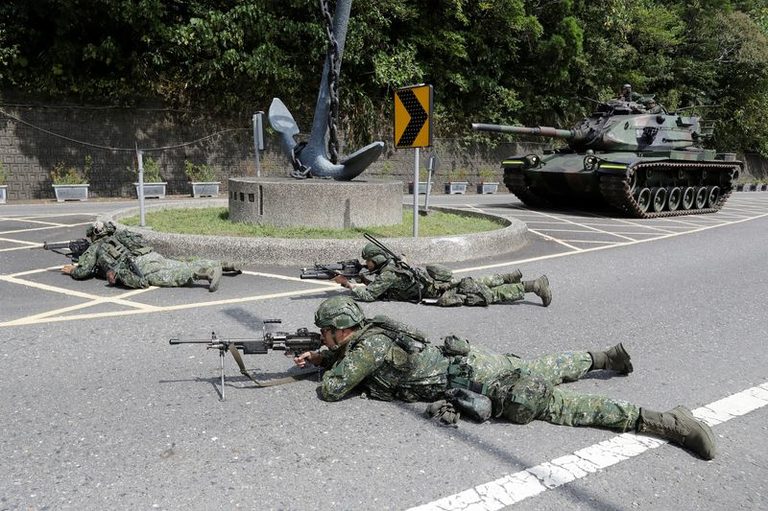
In a move that underscores Taiwan’s resolve to safeguard its sovereignty, the Executive Yuan announced on Thursday an 18% increase in the island’s defence budget for the 2027 fiscal year. The proposed allocation of T$1.1225 trillion—just over 3% of Taiwan’s gross domestic product—marks the first time the budget will exceed the T$1 trillion threshold.
Legislative backdrop and political dynamics
The proposal follows a cabinet meeting that approved the overall 2027 general budget. President Lai Ching‑te, who has made military modernisation a central pillar of his administration, had already signaled the spending target earlier in the week. Lai now faces a test in Taiwan’s opposition‑dominated Legislative Yuan, which only cleared this year’s budget after months of delay. While the two main opposition parties have pledged support for a strong defence, they have warned they will not provide a “blank cheque” for the government’s plans.
Components of the budget
Beyond the core increase for the armed forces, the budget earmarks additional funds for veterans and the Coast Guard, which serves as an auxiliary to the navy in protecting Taiwan’s maritime zones. The spending plan aligns with Taipei’s broader strategy to develop indigenous defence capabilities, including the construction of domestically‑built submarines.
External pressures and regional security
China continues to view Taiwan as a renegade province and has intensified military and political pressure in recent years. Beijing’s air and naval assets operate almost daily in the waters and skies surrounding the island, and the People’s Liberation Army has introduced new tactics such as coast‑guard “law‑enforcement” patrols off Taiwan’s east coast. In response, Taiwan completed its annual Han Kuang military drills last week, simulating scenarios ranging from repelling a maritime blockade to defending against aerial incursions. China’s Defence Ministry dismissed the exercises as a “wasteful charade” that “stoked war panic.”
U.S. encouragement
Washington has repeatedly urged Taiwan to shoulder a larger share of its own defence costs, mirroring U.S. pressure on European allies to increase spending. The United States continues to provide arms sales and security assistance, but the latest budget proposal reflects Taipei’s willingness to meet those expectations and assert its own fiscal responsibility for national security.
Implications for the region
Should the budget be approved by the legislature, Taiwan will join a small group of nations that allocate more than 3% of GDP to defence—a level often cited as a benchmark for robust security postures. The increase signals to both domestic audiences and international partners that Taiwan remains committed to maintaining a credible deterrent against potential aggression.
Analysts note that the budget’s focus on modernisation, veteran care, and maritime security reflects a comprehensive approach to defence that balances immediate operational needs with long‑term capability development. As the island navigates a complex geopolitical environment, the proposed spending surge will likely shape Taiwan’s defence posture for years to come.
Original reporting: Appleton, WI News Feed (HLL/CB) — read the source article.