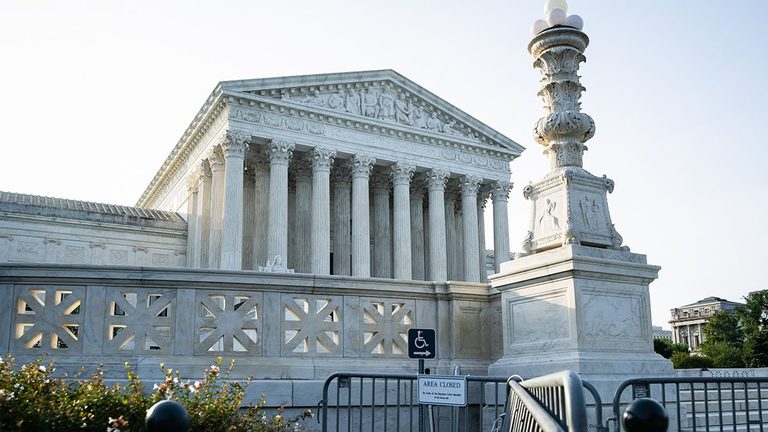
The Supreme Court has handed down several major rulings as the term comes to a close, with significant implications for President Trump’s immigration policies. The court has largely upheld Trump’s immigration crackdown, allowing him to redistrict for partisan advantage and expanding his ability to control federal regulatory agencies.
Immigration Rulings
The court’s ruling on immigration has given the president effective control over independent regulatory agencies, allowing him to fire their leaders at will. This decision could have far-reaching consequences for the federal workforce and the ability of agencies to operate independently of the executive branch.
The court also ruled in favor of Trump’s call to redistrict for partisan advantage, making it harder for minority voters to challenge electoral districts that result in reduced opportunities to elect candidates of their choice. Additionally, the court allowed the Department of Homeland Security to end deportation protections for hundreds of thousands of Venezuelans and Haitians and to employ a restrictive policy limiting the number of people seeking asylum each day at the southern border.
Birthright Citizenship and Gun Rights
The court also ruled on the issue of birthright citizenship, with six justices determining that Trump had gone too far in seeking to limit citizenship to children born to parents who are in the country illegally or temporarily. However, four justices adopted the administration’s reading of the 14th Amendment, which could potentially permit denying citizenship to children born to parents who are in the country illegally or temporarily.
In a separate ruling, the court backed Second Amendment rights, finding that people cannot be barred from owning firearms simply because they regularly use marijuana. The court also struck down a Hawaii law that required people to get permission to carry guns into stores and hotels.
Original reporting: NBC4 Los Angeles — read the source article.