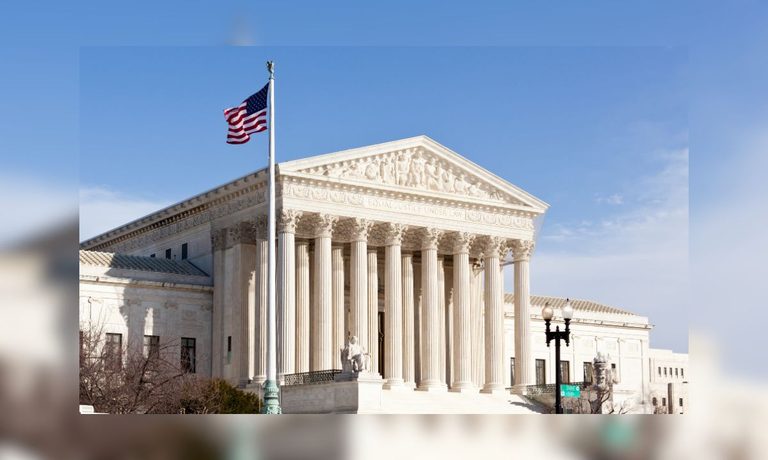
The U.S. Supreme Court has upheld the Federal Communications Commission’s (FCC) authority to impose fines through its administrative enforcement process, rejecting a challenge from wireless carriers AT&T and Verizon. The companies argued that the system violated their constitutional right to a jury trial.
Supreme Court Decision
In an 8-1 decision, the court ruled that the FCC’s process for assessing civil penalties does not infringe on protections guaranteed by the Seventh Amendment. Chief Justice John G. Roberts Jr., writing for the majority, stated that the FCC’s forfeiture orders do not automatically require companies to pay penalties, thus not denying them access to a jury trial. The companies could challenge the penalties by refusing to pay and pursuing the matter in federal court, where a jury could ultimately decide the case.
Justice Clarence Thomas was the lone dissenter in the decision, which represents a victory for the FCC and the Trump administration, which defended the agency’s forfeiture process as a key enforcement tool.
Background of the Case
The case originated from FCC penalties approved in 2020 after the agency determined that wireless carriers had improperly sold access to customers’ location information without obtaining user consent. The FCC fined AT&T more than $57 million and Verizon over $48 million, with additional fines imposed on T-Mobile and Sprint, totaling nearly $200 million. The FCC found that the carriers tracked cellphone users’ locations and sold the information to third parties, compromising sensitive location data of tens of millions of consumers.
AT&T paid its fine but appealed, and the U.S. Court of Appeals for the Fifth Circuit ruled in the company’s favor, finding that the Communications Act of 1934 violated its right to a jury trial. Verizon also paid its penalty and challenged the FCC’s actions, but the U.S. Court of Appeals for the Second Circuit rejected the company’s argument, concluding that Verizon could have obtained a jury trial by declining to pay. These conflicting appellate rulings led to the Supreme Court’s involvement.
Implications of the Ruling
The Supreme Court’s decision was closely watched as it tested the authority of federal agencies to enforce regulations through internal proceedings. Administrative agencies have increasingly faced legal challenges from critics who argue that certain enforcement actions should be handled in court rather than through agency processes.
FCC Chairman Brendan Carr welcomed the ruling, stating that the agency would continue to hold companies accountable. Supporters of the decision, like Caroline Flynn from Earthjustice, argue that it preserves the government’s ability to enforce laws that protect consumers, communities, and the environment.
The decision leaves intact a regulatory framework used not only by the FCC but also by other federal agencies that rely on civil penalties as part of their enforcement efforts.
Original reporting: The Dallas Express — read the source article.