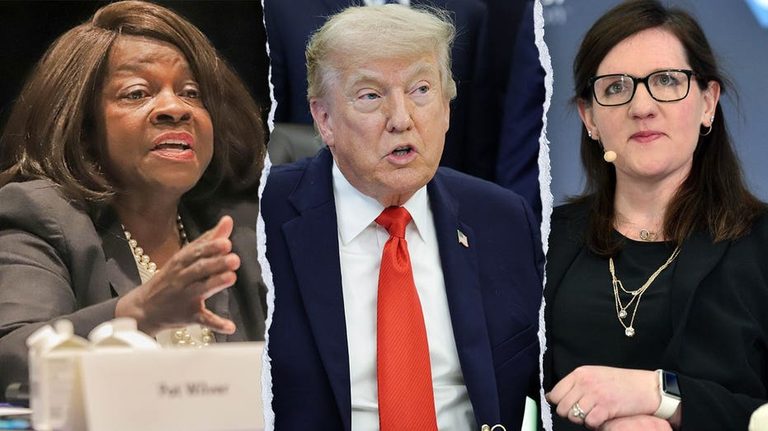
The Supreme Court is set to hear two high-stakes cases that could reshape the balance of power in Washington, specifically President Donald Trump’s authority to remove federal officials. The cases, Slaughter v. Trump and Trump v. Cook, involve the firing of Federal Trade Commission Commissioner Rebecca Kelly Slaughter and Federal Reserve Governor Lisa Cook, respectively.
Unitary Executive Theory
The Slaughter case has become a major test of the unitary executive theory, which holds that Article II gives the president control over officials who exercise executive power. The Trump administration argues that limits on the president’s ability to remove FTC commissioners violate his Article II executive powers.
Constitutional law expert Robert McWhirter argued that supporters of broader presidential power should consider how that authority might be used by future administrations. McWhirter also defended independent boards as valuable safeguards that remove certain decisions from day-to-day partisan politics.
Federal Reserve Independence
The Cook dispute has drawn opposition from a bipartisan group of former Federal Reserve chairs, former Treasury secretaries, and economists, who warned that allowing presidents greater control over Federal Reserve governors could undermine central-bank independence and create economic instability.
Catholic University of America law professor Joel Alicea noted that the Trump administration’s approach in the Slaughter case differed significantly from its strategy in Cook. The administration argued in Slaughter that the FTC Act’s removal limit unconstitutionally restricts the president’s Article II authority.
Many legal experts expect the Court to be more receptive to the administration’s argument in Slaughter than in Cook, where the Fed’s longstanding independence may weigh heavily.
Original reporting: Fox News (HLL/CB) — read the source article.