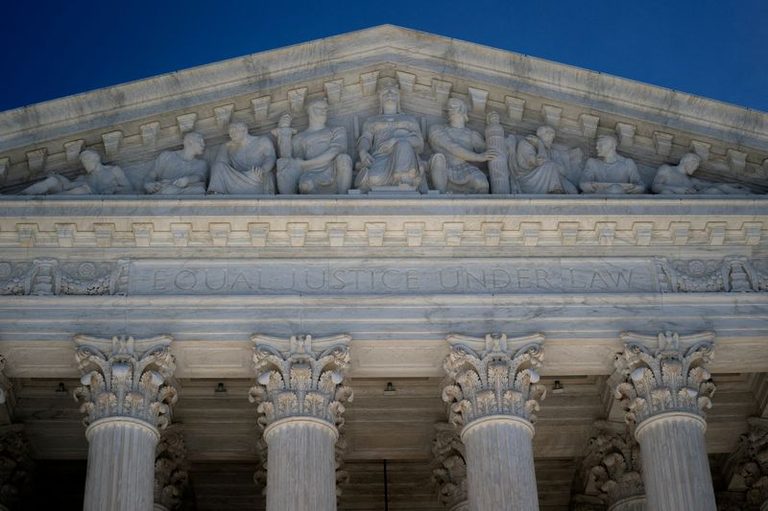
The U.S. Supreme Court begins its new term on Monday, and the docket features a slate of nationally significant cases that will shape immigration, gun rights, environmental liability, voting regulations, religious liberty, and major corporate disputes. President Trump’s administration is actively defending several of its policies before the nation’s highest court.
Immigration detention and third‑country removals
The Court will consider the legality of the administration’s mandatory detention policy, which requires illegal immigrants to remain in custody throughout deportation proceedings. The case, brought by a Brazilian national, challenges the administration’s departure from the long‑standing practice of allowing bond release while immigration cases are pending. A decision is expected by the end of June.
In a separate matter, justices will hear arguments in December on the administration’s “third‑country” deportation program, which sends migrants to nations other than their own without a full assessment of potential harms. The Supreme Court allowed the policy to remain in effect after a lower‑court ruling declared it unlawful. Human‑rights groups report that more than 25,000 migrants have been sent to 29 different countries under the program.
Semi‑automatic rifle bans
On December 2, the Court will review challenges to state bans on semi‑automatic rifles such as the AR‑15. Lower courts in Cook County, Illinois, and Connecticut have upheld the bans, rejecting claims that they violate the Second Amendment. Gun‑rights advocates argue that the Supreme Court’s prior decisions protect firearms that are in “common use.” A ruling is also expected by the end of June.
Big oil climate liability
Monday’s arguments will focus on a lawsuit filed by officials in Boulder, Colorado, seeking to hold ExxonMobil and Suncor Energy financially responsible for contributing to climate change. The oil companies appealed after a lower court permitted the case to proceed. The suit alleges state‑law violations and seeks monetary damages for costs incurred by the city in mitigating climate impacts.
Voting‑rights restrictions in Arizona
On December 8, the Court will consider a Republican‑led effort to reinstate stricter proof‑of‑citizenship requirements for voter registration and to purge state rolls of alleged non‑citizens. The administration has backed key elements of the appeal. Critics argue the measures disproportionately affect Latino, Native American, and student voters, who tend to support Democratic candidates.
Religious liberty and preschool funding
November 3 will see arguments from the Archdiocese of Denver and other Catholic entities seeking exemption from Colorado’s preschool funding program’s nondiscrimination requirement. The lower court found the program did not violate the First Amendment. The plaintiffs contend that the requirement to enroll all children regardless of sexual orientation or gender identity conflicts with their religious convictions.
Corporate disputes: Epic Games vs. Apple and PepsiCo trademark
The Court will also hear Apple’s appeal in the Epic Games contempt case, stemming from a 2020 antitrust lawsuit over App Store fees. Additionally, Rise Brewing will argue that PepsiCo’s “Mtn Dew Rise” energy drink infringes its trademark, seeking relief after a lower court rejected its claim.
Each of these cases carries the potential to set precedent on issues that affect everyday Americans, from the safety of our communities to the protection of religious freedoms and the integrity of our electoral process. The Supreme Court is expected to issue rulings on all of these matters by the end of June, providing clarity on the nation’s most pressing legal battles.
Original reporting: Appleton, WI News Feed (HLL/CB) — read the source article.