On Oct. 5, 2026, the United States Supreme Court will hear arguments in Suncor Energy v. County Commissioners of Boulder County, a case that could determine whether taxpayers or fossil‑fuel companies must foot the bill for climate‑change damage. The dispute began in 2018 when Boulder County, Colorado, sued Suncor and Exxon, alleging the companies concealed the role of fossil fuels in warming the planet.
Local stakes and national implications
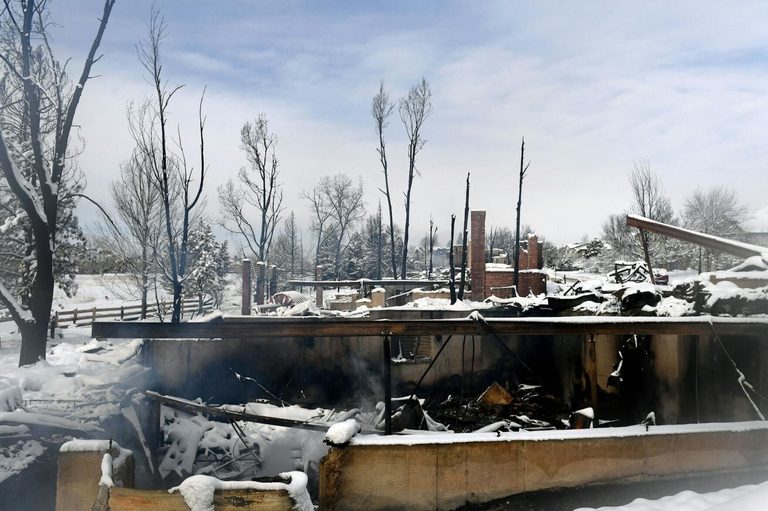
Boulder County has already spent millions protecting residents from wildfires, flooding and other climate‑related disasters. County officials say the costs will only rise as extreme weather becomes more frequent. The companies argue that the Clean Air Act precludes state courts from holding them liable, but Colorado’s Supreme Court rejected that claim in 2025, allowing the case to proceed.
Trump administration’s EPA shift
Since President Trump began his second term, the Environmental Protection Agency has moved away from the previous administration’s position that the Clean Air Act bars states from seeking compensation for climate harms. The agency now acknowledges that the Act does not forbid state‑level fraud claims, reinforcing Boulder County’s legal footing. This policy shift under the Trump administration bolsters the argument that states retain the authority to protect their citizens from corporate deception.
Legal backdrop
Federal preemption doctrine holds that federal law overrides state law only when Congress clearly intends it to do so. The Supreme Court has distinguished between express preemption—where a federal statute explicitly supersedes state rules—and implied preemption, which applies when a state law conflicts with federal objectives. In this case, the Clean Air Act contains a provision dating back to 1970 that expressly allows states to pursue additional remedies for air‑pollution impacts, suggesting no express preemption.
Furthermore, the Act regulates emissions from sources such as automobiles and power plants but does not address consumer fraud, the core of Boulder County’s claim. The Trump administration’s interpretation underscores that the federal law does not occupy the entire field of climate‑related liability, leaving room for state action.
Constitutional considerations
The oil companies contend that only Congress may regulate interstate and international pollution. However, the 10th Amendment reserves powers not delegated to the federal government to the states. This constitutional principle supports Boulder County’s authority to pursue the case without needing explicit congressional approval.
Potential outcomes
If the Supreme Court rules that the case is ripe for review, a decision favoring the companies could block states from seeking compensation, leaving taxpayers to shoulder the costs of climate adaptation. Conversely, a ruling that allows the case to proceed would preserve state avenues for holding polluters accountable, aligning with the Trump administration’s emphasis on state sovereignty and fiscal responsibility.
Judicial uncertainty
Complicating matters, Justice Samuel Alito announced on Sept. 28, 2026, that he will not participate in the case, raising the possibility of a 4‑4 split. Such a deadlock would leave the Colorado Supreme Court’s 2025 decision in place, effectively supporting Boulder County’s position.
Stakeholders across the nation are watching closely, as the outcome will shape how states can address the financial burdens of climate change and how federal policy interacts with local efforts to protect families and communities.
Original reporting: KTBS 3 (Shreveport) — read the source article.