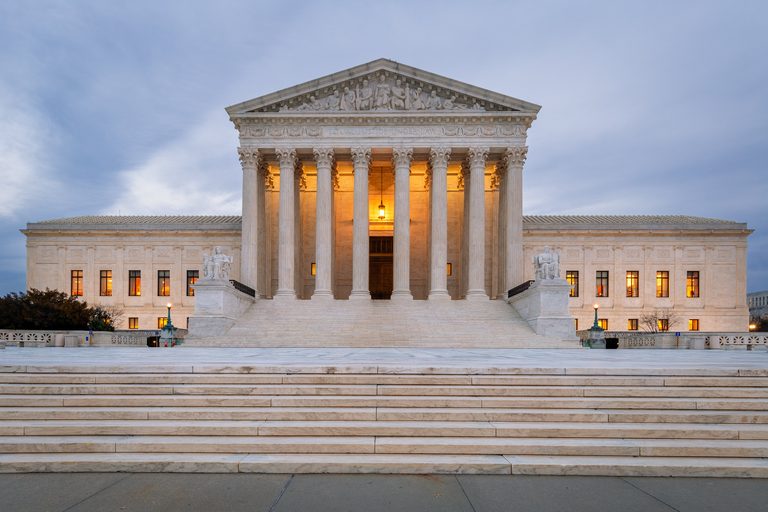
The Supreme Court began its October term on Monday, and the docket immediately reflects the nation’s most contentious policy fights. Among the first cases are a climate‑change liability appeal, two immigration disputes tied to President Trump’s enforcement agenda, and a challenge to state bans on semiautomatic rifles.
Energy companies contest climate lawsuits
Energy firms Suncor and ExxonMobil will argue before the justices that dozens of lawsuits seeking to hold them financially responsible for climate‑related disaster costs should be dismissed. The lawsuits stem from a case in Boulder, Colorado, where local officials contend that the industry should help shoulder the rising expenses of climate‑driven emergencies.
The companies maintain that litigation is the wrong tool for addressing a global problem and point to the Trump administration’s support, which argues that the suits represent a power grab aimed at imposing new emissions regulations.
Immigration enforcement under scrutiny
Two separate immigration cases will test the breadth of President Trump’s crackdown. The first concerns the deportation of migrants who cannot be quickly returned to their home countries. The administration has been sending thousands of such individuals to third‑country agreements that are often kept secret.
The Supreme Court is expected to consider whether lower‑court orders that allow these migrants to object should be overturned. In the meantime, the flights have continued.
The second case focuses on the administration’s mandatory detention policy, which permits the government to hold undocumented immigrants without a bond hearing, even after years of residence in the United States. While the administration argues that this authority is lawful, most appellate courts have disagreed.
State bans on semiautomatic rifles face Second Amendment challenge
About a dozen states have enacted bans on semiautomatic rifles such as the AR‑15, labeling them as assault weapons and asserting that the bans help curb mass‑shooting incidents. Plaintiffs argue that these bans violate the Second Amendment, noting that rifles like the AR‑15 are among the most popular firearms in the country.
The conservative‑majority Court has expanded gun rights in recent years, and four justices have signaled that it was only a matter of time before the issue reached the bench. The case is slated for December.
Other notable cases on the horizon
A Republican‑backed push to enforce stricter voting‑law measures in Arizona will also be heard this term. One proposal would require proof of citizenship on voter‑registration forms, while another calls for regular purges of voter rolls when citizenship cannot be confirmed. The administration has been unable to pass similar legislation through Congress.
In November, the Court will consider a case involving Catholic preschools in Colorado that have been excluded from a state‑funded universal preschool program because of their faith‑based admissions policies, which bar children from LGBTQ+ families. The state argues that religious schools may participate if they comply with nondiscrimination requirements.
These cases underscore the Court’s pivotal role in shaping policy areas that affect families, faith communities, and individual liberty across the nation.
Original reporting: NBC6 Miami — read the source article.