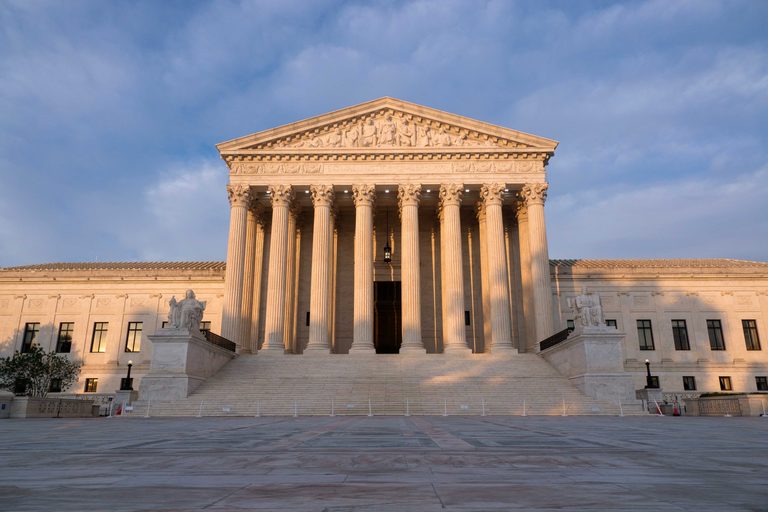
The Supreme Court has made a significant ruling regarding mail-in ballots, deciding that states can count ballots that are mailed on time but arrive after Election Day. This decision was made in a 5-4 vote, with Justice Amy Coney Barrett writing the opinion. The ruling is a defeat for President Donald Trump, who has claimed that mail-in voting encourages fraud, despite a lack of evidence to support this claim.
Background of the Case
The case originated in Mississippi, where the state allowed ballots postmarked by Election Day to be counted if they arrived within five business days of the election. Thirteen other states have similar grace periods for mail ballots, and another 15 have longer deadlines for military and overseas voters. The Republican National Committee and the Mississippi Republican Party challenged the state’s law, arguing that it violated federal law.
During arguments before the Supreme Court in March, Mississippi Solicitor General Scott Stewart noted that the Trump administration had failed to produce a single case of fraud due to mail ballots that arrived after Election Day. The liberal justices on the court indicated that they would uphold the state laws, citing federal law that allows states to set their own regulations governing elections.
Implications of the Ruling
The Supreme Court’s decision spares officials the headache of changing their ballot rules just a few months before the 2026 midterm congressional elections. The ruling also affects other states with deadlines after Election Day, including California, Texas, New York, and Illinois. Rural areas of Alaska also allow post-Election Day ballots.
Original reporting: NBC4 Los Angeles — read the source article.