The nation’s highest court stepped in on Friday afternoon to temporarily block a district‑court order that required the White House ballroom project to cease at midnight. The Supreme Court’s stay does not resolve the legal dispute; it simply gives the justices more time to review President Donald Trump’s request that the lower‑court rulings be suspended indefinitely.
Background of the controversy
Two separate federal courts have already ruled that the ballroom construction proceeds without congressional approval and therefore violates the Constitution’s allocation of spending authority. Those rulings characterized the project as unlawful because the President has not obtained the necessary appropriations from Congress.
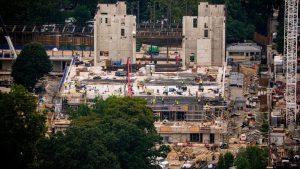
President Trump’s administration argues that the ballroom, described as a “massive new ballroom complex,” is part of a broader effort to modernize the White House and that the work is essential to the executive branch’s functions. The administration submitted a filing to the Supreme Court indicating that a 250‑person crew has been working 20‑hour days, seven days a week, and that the project is roughly 65 % complete.
Supreme Court’s temporary order
In its Friday order, the Court granted a temporary stay, allowing construction to continue past the midnight deadline set by the lower court. The order is limited in scope: it does not address whether the President has the authority to fund or direct the project without explicit congressional approval. Instead, the stay is intended to preserve the status quo while the justices consider the merits of Trump’s petition to pause the adverse rulings.
Legal scholars note that the Supreme Court’s involvement underscores the tension between executive ambition and the Constitution’s checks and balances. The case may ultimately clarify the limits of presidential power to initiate large‑scale construction projects without a specific appropriation bill.
Implications for the administration
If the Supreme Court ultimately lifts the stay, the lower‑court rulings could force an immediate halt to the ballroom work, potentially leaving a partially built structure on the White House grounds. Conversely, a decision in favor of the administration could set a precedent for future executive‑branch projects that bypass the traditional congressional appropriations process.
For now, the construction crew remains on site, continuing work on what the administration calls a “grand ballroom” intended to host official functions and state events. The project’s progress and the legal battle surrounding it will likely remain in the public eye as the Court’s arguments are heard and a final decision is rendered.
Next steps
The Supreme Court has not set a date for oral arguments, but the stay will remain in effect until the justices issue a further order. Both the administration and the plaintiffs in the lower‑court cases have indicated they will be closely monitoring the proceedings.
As the nation watches, the case serves as a reminder of the ongoing dialogue between the executive branch, the judiciary, and Congress over the proper scope of presidential authority.
Original reporting: KRDO (Colorado Springs metro) — read the source article.