The Supreme Court’s recent intervention in Callais and the rush to allow Louisiana to redraw its congressional map has set off a fiery debate in Washington and Baton Rouge. Justices Samuel Alito, Clarence Thomas, Neil Gorsuch, Sonia Sotomayor, Elena Kagan and Ketanji Brown Jackson all play starring roles in the dispute over Section 2 of the Voting Rights Act, and Governor Jeff Landry is already scrambling to reschedule Louisiana’s primary. This piece walks through why the court acted, what changed about decades of voting litigation, and why Justice Ketanji Brown Jackson’s dissent has become a flashpoint in conservative circles.
For decades courts relied on a broad reading of Thornburg v. Gingles (1986) that pushed states toward majority-minority districts whenever possible. That interpretation forced map drawers to treat race as the dominant factor and to aim for proportional representation even when politics, not racial discrimination, explained outcomes. The Supreme Court in Callais said enough. It returned to a narrower reading of Section 2, requiring proof of intentional racial discrimination before courts order race-based remedies.
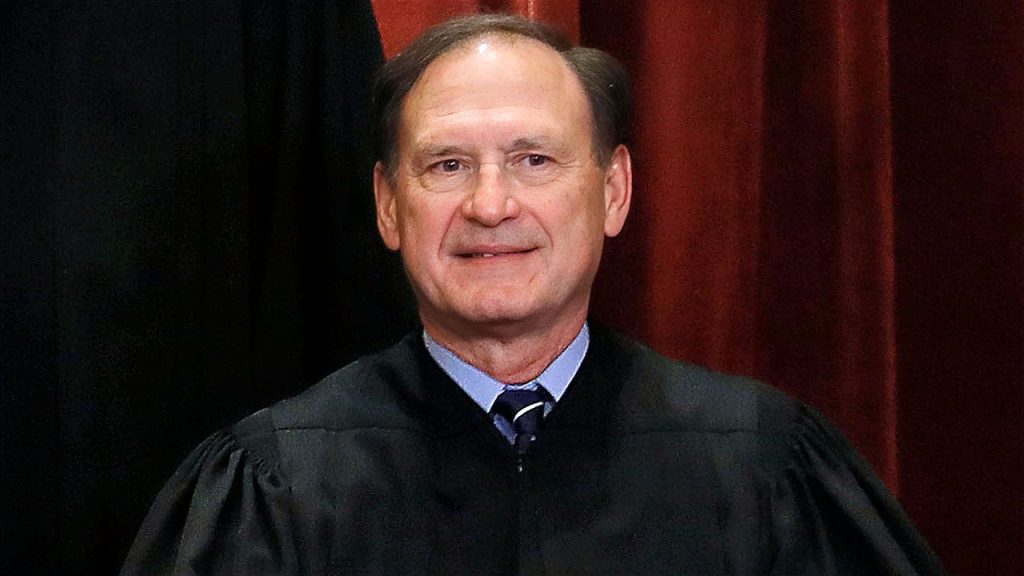
Justice Samuel Alito wrote the majority opinion that puts limits back on judges who were turning Section 2 into a quota machine. Alito made clear that remedies tied to the Voting Rights Act are available to fix intentional racial exclusion, not to correct the rough edges of partisan politics. That distinction matters because it frees states like Louisiana to consider traditional districting criteria without being forced to carve maps primarily by race.
Not everyone on the bench agreed about how far to go. Justice Clarence Thomas, joined by Justice Neil Gorsuch, would have gone further and effectively curtailed Section 2 more drastically. Meanwhile Justices Sonia Sotomayor and Elena Kagan opposed the majority’s narrowing of the law. The court’s fractious mix of views underscores how volatile voting litigation has become, and how what began as a civil-rights measure in the 1960s now triggers constitutional fights over race and politics.
Practical consequences moved fast. A lower court ordered Louisiana to explain how it would comply with the ruling as primaries approached and early voting began. Governor Jeff Landry suspended the primary to buy time for a lawful redraw. The Supreme Court used its Rule 45 discretion to issue the judgment promptly so the state could act without waiting the usual delay meant for rehearing requests.
The move to expedite was logical to conservatives who want elections run on a predictable schedule and maps drawn according to constitutional limits. Waiting weeks for a formality would have needlessly held up voters and election officials. The court’s decision to step in was not an ideological stunt; it was a pragmatic choice to let Louisiana fix an unconstitutional map before ballots went out.
Justice Ketanji Brown Jackson did not join the judgment and instead penned a dissent that accused colleagues of making the court look partisan. Her critique drew a blistering response from Justice Alito, who labeled her attack “insulting.” That exchange has energized conservatives who see Jackson as a disruptive force on the court rather than a bridge-builder.
Jackson’s style has consequences beyond rhetoric. Where justices like Leondra Kruger or Michelle Childs might seek consensus, Jackson often writes forceful dissents that widen divisions. President Joe Biden’s promise to nominate “our first Black woman justice” produced a justice who has reshaped expectations on how a liberal member of the court would strategize and debate. The result: conservatives say her blunt approach unintentionally unites them.
The ruling also ties back to Rucho v. Common Cause (2019), which left partisan gerrymandering in the political arena rather than in federal courts. Callais reinforces that line by separating race-based remedies from disputes over party advantage. Courts that once tried to fix partisan outcomes by drawing race-conscious districts will now have to show intentional racial discrimination before stepping in.
Other high-profile cases inform this moment. The Court’s willingness to expedite judgments echoes its quick action in Trump v. Anderson (2024), which rejected an expansive use of Section 3 of the 14th Amendment. And last term’s decision in Trump v. CASA showed the bench pushing back on overbroad injunction practices. Taken together, these rulings reflect a judicial majority eager to rein in what they see as legal overreach.
Louisiana is now left to redraw its map under tighter constitutional constraints while campaigns and voters adjust on the fly. Commentator Michael Davis and others have noted how court timing can determine not only legal outcomes but also who wins and who loses at the ballot box. What happens next in Baton Rouge will test whether states can honor both equal representation and the rule of law without turning every census into a courtroom fight.