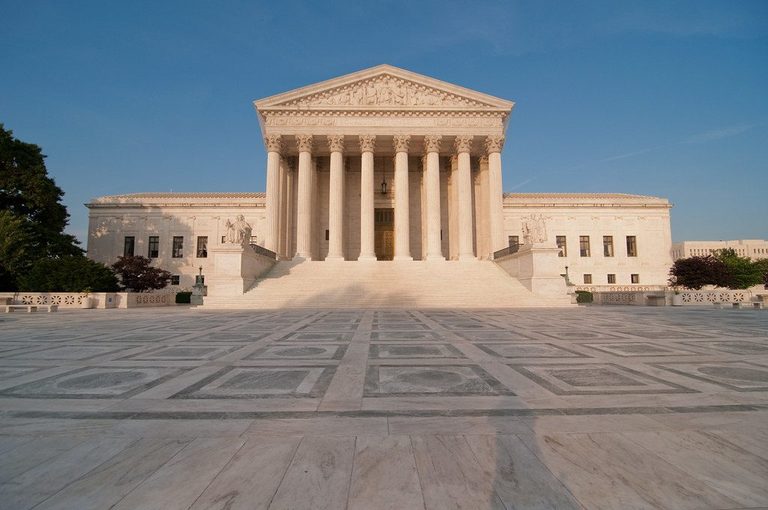
The nation’s highest court has refused to hear a case that could have reshaped how public schools regulate student speech. A Michigan mother sued her local school district, arguing that a ban on sweatshirts bearing the phrase “Let’s Go Brandon” infringed her sons’ First Amendment rights. The Supreme Court’s denial of certiorari means the district’s policy remains law.
Background of the dispute
In December 2022 the mother purchased two “Let’s Go Brandon” sweatshirts as Christmas gifts for her boys. When the students arrived at school, administrators instructed them to remove the garments, citing the district’s dress‑code that prohibits clothing with lewd or vulgar implications. The phrase, which originated after a 2021 NASCAR race, has become a coded expression of opposition to President Biden.
Lower‑court rulings
Both the district court and the Sixth Circuit Court of Appeals upheld the school’s decision. The courts found that, despite lacking explicit profanity, the phrase carries an implied vulgar meaning that justifies restriction in a school environment. The rulings emphasized that schools may limit speech that is likely to cause disruption or that conveys a lewd message, even when the speech also contains a political component.
Arguments presented to the Supreme Court
The mother’s attorneys contended that the phrase contains no profanity or sexual content and that the school was suppressing lawful political expression. They urged the Court to recognize the students’ right to convey a political viewpoint without fear of censorship.
Why the Court’s refusal matters
By declining to take the case, the Supreme Court left the existing precedent untouched. This outcome reinforces the authority of local school boards to enforce dress‑code policies that address perceived vulgarity, even when the speech also carries a political message. It also signals that the Court is not prepared to expand student free‑speech protections in this context at the present time.
Implications for schools and families
School districts across the country can look to this decision as affirmation that they may continue to prohibit apparel that, while political, is widely understood as a substitute for profanity. Parents should be aware that school dress codes may restrict certain slogans, and they can seek clarification from administrators if they are unsure whether a particular phrase is permissible.
Broader context
The “Let’s Go Brandon” slogan has become a rallying cry for many conservatives who view it as a stand against what they see as liberal overreach. The Supreme Court’s inaction does not endorse the phrase, but it does uphold the principle that schools may regulate speech that is deemed vulgar or disruptive. The decision also underscores the ongoing tension between free‑speech advocates and educators tasked with maintaining a respectful learning environment.
For the two Michigan students involved, the ruling means the school’s ban remains in effect and their challenge ends without a hearing at the nation’s highest court.
Original reporting: WOWO News/Talk (Fort Wayne) — read the source article.