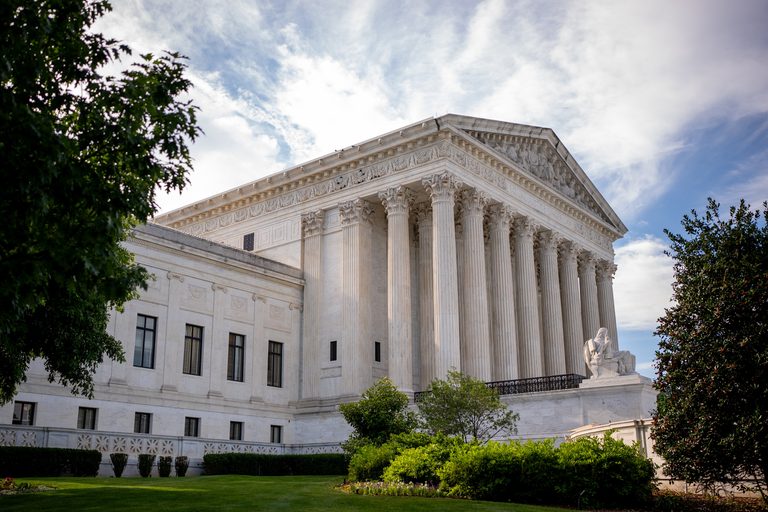
The Supreme Court struck down a federal law that restricts the president’s ability to fire members of the Federal Trade Commission, expanding presidential control over independent federal agencies. This decision overturns a 90-year-old precedent known as Humphrey’s Executor, which has limited when presidents can fire agencies’ board members.
Background of the Case
The court’s conservative majority voted 6-3 to uphold President Donald Trump’s decision to fire Rebecca Slaughter, a Democratic commissioner on the Federal Trade Commission. The Justice Department argued that the FTC and other executive branch agencies are under Trump’s control and that he is free to remove commissioners without cause.
Chief Justice John Roberts wrote for the majority, stating that “subordinates who exercise the President’s power are subject to removal by him.” The three liberal justices — Sonia Sotomayor, Ketanji Brown Jackson, and Elena Kagan — dissented, with Sotomayor writing that the decision “undoes centuries of political practice” and gives the President a power unknown even to the English Crown.
Implications of the Decision
The logic of the decision extends to other agencies, including the National Labor Relations Board, the Merit Systems Protection Board, and the Consumer Product Safety Commission. However, the justices carved out an exception for the Federal Reserve, ruling that Trump did not have authority to remove Lisa Cook from the central bank.
The decision has significant implications for the balance of power between the executive branch and independent agencies. It also raises concerns about the potential for increased political influence over these agencies and the impact on their ability to regulate industries and protect consumers.
Original reporting: NBC Connecticut — read the source article.