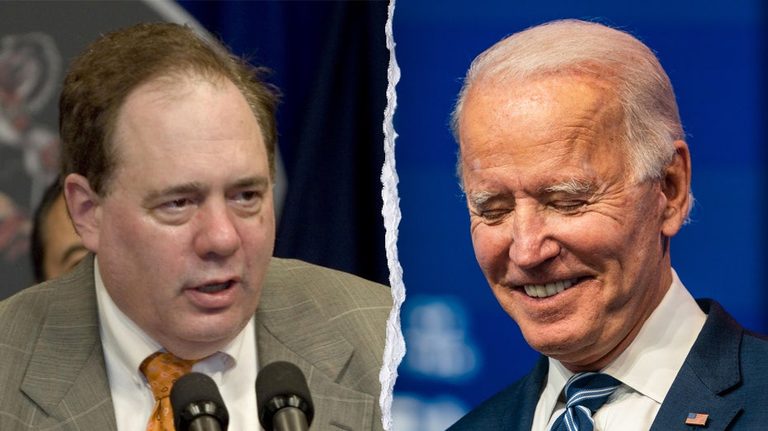
The nation’s highest court announced on Monday that it will not take up the appeal of former Pennsylvania judge Mark Cohen. Cohen, a former Democratic state lawmaker who served on the Philadelphia Court of Common Pleas beginning in 2018, was suspended after repeatedly posting partisan political content on Facebook, including praise for President Joe Biden and his policies.
Background of the case
During his tenure on the bench, Cohen posted dozens of politically charged messages on his personal Facebook page, even after the Pennsylvania Judicial Conduct Board warned him to cease such activity. In November 2021 he lauded the passage of President Biden’s Build Back Better legislation, saying it would improve “many, many American lives.” A year later, on Biden’s birthday, Cohen called the president “an excellent President” and expressed optimism about “many more achievements.” He also used the platform to advocate for higher minimum‑wage laws, oppose restrictions on elective abortions, and criticize gun‑control measures, noting that he had consistently received an “F” rating from the National Rifle Association while serving in the state legislature.
Supreme Court’s denial
Cohen’s legal team filed a petition with the Supreme Court in April, arguing that his First Amendment rights had been violated by the disciplinary action. The petition claimed that punishing judges for the “tone” or “volume” of lawful speech invites arbitrary enforcement and threatens the rule of law. The Court denied the petition without comment, effectively leaving the Pennsylvania Judicial Conduct Board’s suspension in place.
State officials’ response
Representatives of the Pennsylvania Judicial Conduct Board said the Supreme Court’s refusal to hear the case underscores that Cohen’s social‑media activity amounted to “partisan cheerleading” and that his suspension was a “straightforward application of familiar rules that judges around the country have followed for decades.” The state’s highest court also noted that the volume and tone of Cohen’s posts made him appear to be an advocate for the Democratic Party, violating standards of judicial impartiality.
Implications for judicial conduct
The decision reaffirms the principle that judges, while entitled to free speech, must avoid public advocacy that could compromise the appearance of neutrality. Legal scholars have long warned that unchecked partisan expression by sitting judges could erode public confidence in the judiciary. Cohen’s case, which also raised the issue of forfeiture of his judicial and prior public‑service pensions, highlights the stakes involved when a judge’s extrajudicial conduct crosses established ethical lines.
Reactions
DLA Piper, the law firm representing Cohen, declined to comment when contacted by Fox News Digital. Advocacy groups on both sides of the political spectrum have used the case to advance their narratives: some argue it is a necessary safeguard for judicial integrity, while others view it as an overreach that chills free speech for public officials.
As the Supreme Court continues to focus on other high‑profile matters, the Cohen decision serves as a reminder that the judiciary remains vigilant about maintaining the public’s trust through adherence to long‑standing conduct standards.
Original reporting: Fox News (HLL/CB) — read the source article.