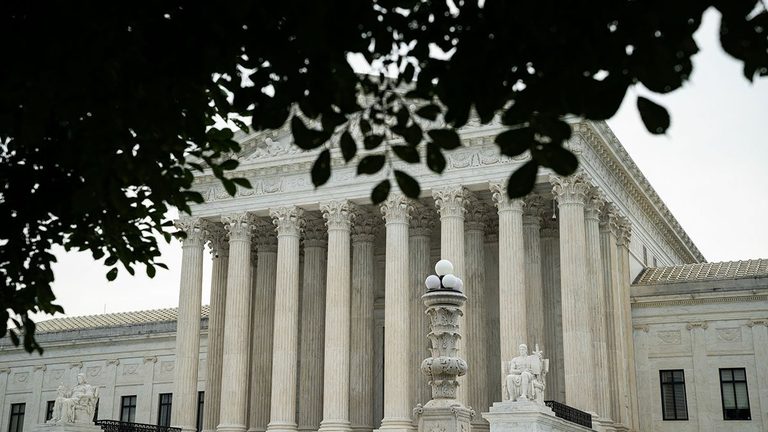
The U.S. Supreme Court on Tuesday removed a key obstacle to the Trump administration’s “third‑country” deportation policy. In an unsigned emergency order, the justices granted the government’s request to block a lower‑court ruling that had deemed the process unlawful because it allegedly denied detainees a chance to raise safety concerns.
Legal backdrop and next steps
The Court’s three liberal justices dissented, but the majority’s decision restores the administration’s ability to proceed while it prepares for oral arguments in December. A definitive ruling on the broader legal questions is still pending.
Policy impact
Since President Trump began his second term in January 2025, the administration has deported thousands of illegal immigrants to third countries with which the United States has agreements. The Migration Policy Institute reports that about 15,000 people were sent abroad in 2025, with Mexico receiving the largest share.
These agreements include nations such as South Sudan, Eswatini and Rwanda, which have pledged not to mistreat deportees. The administration argues that requiring individualized determinations would create logistical problems, increase costs, and impede the removal of dangerous criminals.
Challenges and criticism
Four unnamed illegal immigrants challenged the policy, asserting they need a “meaningful opportunity” to claim they could face torture or persecution if sent to a third country. The plaintiffs cite cases of mistreatment, including indefinite detention and reports of physical and sexual abuse.
U.S. District Judge Brian Murphy in Massachusetts had previously ruled in favor of the plaintiffs, a decision the Supreme Court blocked last year. The 1st U.S. Circuit Court of Appeals later upheld Murphy’s ruling, but the Supreme Court’s emergency order now halts that enforcement.
Administration response
Solicitor General D. John Sauer emphasized that the pause on third‑country removals created “substantial logistical problems” and “added expense, potential diplomatic issues, and the inability to remove dangerous criminals.” He noted that a scheduled flight carrying 70 criminally‑convicted individuals to three different nations was cancelled as a result of the legal uncertainty.
The administration maintains that no individualized determination is required because partner countries have provided assurances they will not torture or persecute deportees. However, the government says it will not proceed with removals unless such assurances are received.
Local relevance
While the ruling is national, its effects are felt in Texas communities where immigration enforcement remains a top priority for public safety. Local law‑enforcement agencies anticipate a smoother process for removing illegal immigrants who pose a threat, aligning with the administration’s commitment to protect families and uphold the rule of law.
Original reporting: Dallas TX News (HLL/CB) — read the source article.