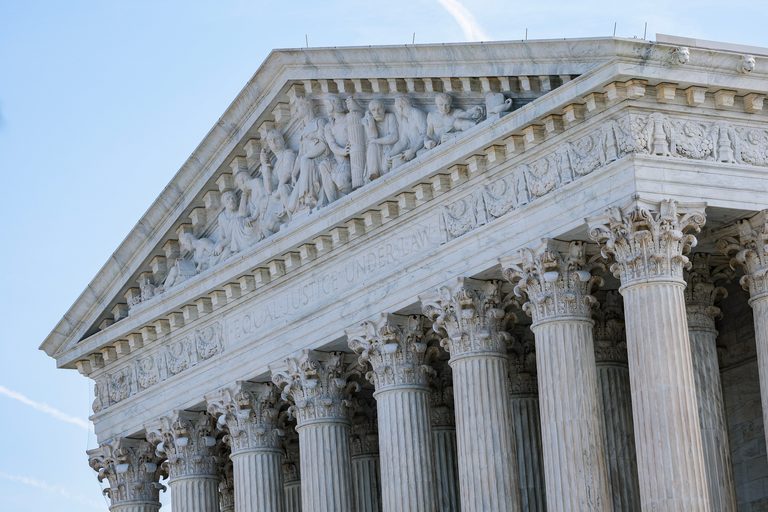
The Supreme Court has allowed the Trump administration to end temporary legal protections for migrants from Haiti and Syria, exposing hundreds of thousands of people to potential deportation.
Background
The Temporary Protected Status (TPS) program was created by Congress in 1990 to prevent deportations to countries suffering from natural disasters, civil strife, and other instability. The program allows people already in the country to stay with work permits in increments of up to 18 months, but it doesn’t provide a path to citizenship.
The U.S. first granted protections to Haitians in 2010 after a catastrophic earthquake, and extended them multiple times amid ongoing gang violence that has displaced more than a million people. Syrians, meanwhile, were first granted protected status in 2012, during a civil war that lasted for more than a decade.
Decision
In a 6-3 decision, the conservative justices overturned lower court orders and allowed the Department of Homeland Security to swiftly end TPS. The court held that Syrian and Haitian nationals are not “entitled to orders postponing the terminations during litigation” and determined federal judges have no authority to weigh in on many of challengers’ claims.
Justices Elena Kagan, Sonia Sotomayor, and Kentanji Brown Jackson, the court’s three liberal justices, dissented. Kagan wrote that the law prevents the program from ending as it likely did here — without the required consultations about country conditions and, as to Haiti, with impermissible race-based considerations tainting the decision.
Original reporting: NBC Connecticut — read the source article.