Go at six in the evening, when the Lafayette River goes copper and the egrets start working the shallows in earnest. You’ll likely have parked somewhere along Granby Street or off Tidewater Drive, and the first quarter mile will feel like nothing special — a flat paved path edging a residential neighborhood, a few joggers, maybe a dog pulling hard toward the water. Give it time.
The Lafayette River Trail runs along the western edge of its namesake tidal river, threading through the Larchmont and Edgewater neighborhoods on Norfolk’s north side. It’s not a long route — roughly three miles out and back if you stay on the primary path — but the way it keeps trading open water views for tunnel-like stretches of live oak and loblolly pine gives the whole thing a stop-and-start rhythm that suits a weekday evening well. You’re never grinding through sameness.
What makes this stretch worth your time isn’t dramatic topography. There are no cliffs, no overlooks, no Instagrammable arch. What you get instead is a close, almost intimate look at tidal ecology in the middle of a working city. The Lafayette is not pristine — it’s an urban waterway — but it’s been cleaning up for decades, and the wildlife reflects that. Great blue herons stand ridiculous and still in the reed grass. Ospreys circle. In spring and fall, the migratory shorebirds come through in numbers that will stop you cold if you didn’t know to expect them.
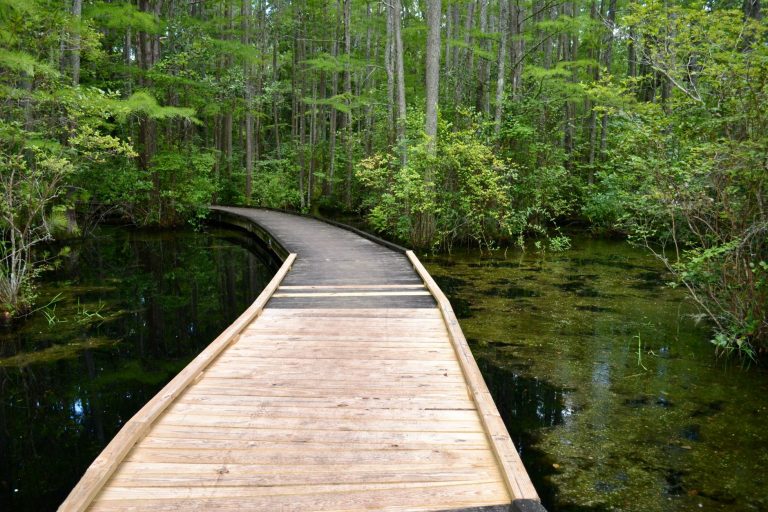
The trail connects to several small pocket parks along the way, and there are benches at intervals that actually face the water rather than the path, which sounds like a small thing until you’re sitting on one watching the tide turn. A few sections cross wooden footbridges over the tidal marsh — low clearance, a little weathered, the kind that feel satisfyingly solid underfoot. Kids do well here, as long as they don’t mind a walk with no clear destination.
Bikes are welcome on the paved portions, though the trail can get narrow in spots and the sight lines are short enough that speed feels reckless. Serious cyclists will find it frustrating. For anyone who wants to cover ground slowly, it’s nearly perfect.
There’s no admission, no parking fee at the main access points, and no concessions anywhere along the route, so bring water, especially in July and August when the humidity comes off the river in waves and even a shaded stretch feels tropical. The best seasons are April through early June and September through November. Midwinter works too — the trail empties out, the marsh grasses go tawny, and the water takes on a pewter look that’s genuinely beautiful if cold-weather walking is your thing.
What distinguishes the Lafayette River Trail from a lot of Norfolk’s outdoor options is the feeling that it hasn’t been curated for you. No interpretive signage every thirty feet. No food trucks at the trailhead. Just a river, a path, and whatever you happen to notice. That restraint, in a city that’s been actively developing its waterfront for years, is almost unusual enough to be remarkable.
Come back more than once, in different seasons, and you’ll start to feel like you actually know the place. That takes a little longer than a single afternoon, but most things worth knowing do.