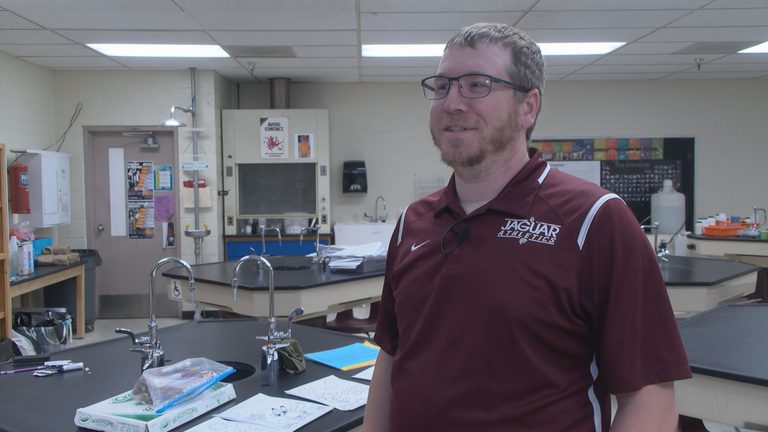
When chemistry teacher Blake Betteridge was walking his dog near Desert View High School in the Sunnyside Unified School District, he spotted an abandoned dishwasher on the curb. The appliance had no hose or power line, but it was free. Betteridge, 39, hauled the unit into his classroom, duct‑taped a drain hose, and with the help of district staff got it running. The dishwasher now washes the beakers, cylinders and test tubes his students need for daily lab work.
Professional development fuels teacher retention
Betteridge’s story is part of a broader district effort to retain teachers through professional development. Sunnyside funds special certification for dual‑enrollment courses, allowing teachers to earn credentials that let high‑school students earn college credit while still in class. The district has invested $6,000 per teacher for seven educators, a move it says saves money and improves student outcomes.
According to the Center for the Future of Arizona, teachers in the state leave at roughly double the national attrition rate of 7%. The cost of turnover ranges from $9,000 to $21,000 per teacher, depending on the district, per the American College of Education. By offering customized workshops, certification subsidies and other growth opportunities, Sunnyside hopes to keep teachers beyond the typical three‑to‑five‑year drop‑out window.
Student benefits of dual enrollment
Dual enrollment has a measurable impact on students. Sunnyside serves about 12,000 learners and now offers 25 new sections of dual‑enrollment courses. State data show Arizona students are twice as likely to enroll in post‑secondary education after completing a dual‑enrollment class. In May, five district graduates earned associate degrees from Pima Community College the day before they received their high‑school diplomas.
District veteran NJ Utter, who retired as student‑services coordinator, said the program gives teachers a path to higher earnings and greater voice without forcing them into administration. “We’ve been committed for a long time to make sure teachers have a voice and opportunities to earn additional money without having to leave the classrooms,” Utter explained.
Local partnerships expand opportunities
Sunnyside has partnered with Pima Community College and the University of Arizona to broaden dual‑enrollment access. Because most adjuncts at Pima must hold a master’s degree—a credential many public‑school teachers lack—the district’s collaboration fills that gap and keeps more students on a college‑ready track.
Utter added, “What does it mean for a district to be able to keep those highly ambitious teachers? It’s about retaining talent and giving our students the tools they need to succeed.”
Other teacher‑development models in Tucson
Across the valley, Tucson Unified School District launched its Teacher Development Academy in 2023. The free two‑year program pays participants a teacher’s salary and benefits while they earn elementary certification through night and summer classes. In exchange, graduates commit to teaching in a TUSD school for at least two years. The first two cohorts each began with 25 participants and reported a 90% retention rate.
Program manager Alicia Nourse said the academy’s curriculum is tailored to the district’s demographic, helping career‑changers—ranging from finance professionals to stay‑at‑home parents—transition into teaching. “The percentage of students that then teach after certification is higher than those who simply earn a bachelor’s and stop,” Nourse noted.
Teachers find renewed purpose
For Betteridge, the dual‑enrollment certification rekindled his enthusiasm for chemistry. He now designs labs that connect classroom concepts to real‑world issues, such as debating whether Tucson should build a nuclear power plant given water scarcity. “It’s really interesting to watch their wheels turn,” he said.
Investing in teachers’ professional growth, from a curb‑side dishwasher to state‑wide certification programs, appears to be paying dividends for both educators and students in the Sunnyside community.
Original reporting: Arizona Luminaria — read the source article.