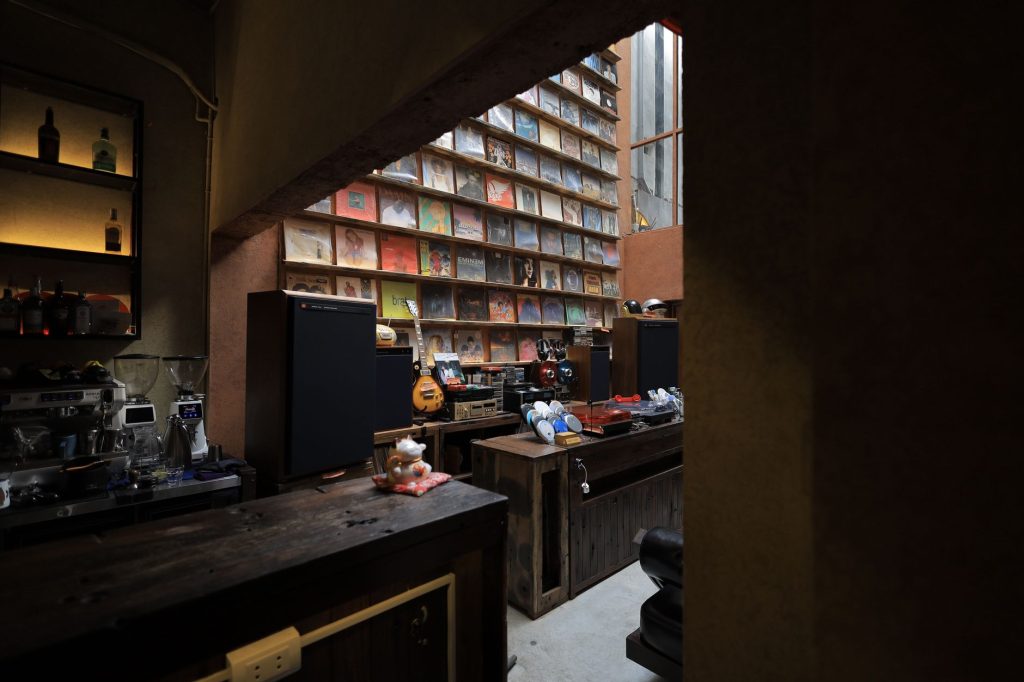
My friend Pete calls it the only bar in Omaha where you can buy a vinyl record, drink a good beer, and argue about Cursive’s best album all in the same hour. He’s not wrong.
Saddle Creek Records & Bar sits on Leavenworth Street in Midtown, not far from Creighton, in a stretch of the city that doesn’t get nearly enough attention from people who live south of Dodge. The label — yes, the actual Saddle Creek Records, home to Bright Eyes, The Faint, Rilo Kiley, and a long catalog of Midwest indie that punched well above its weight — opened a physical space here a few years back, and it functions as exactly what it sounds like: a record shop attached to a bar, run by people who clearly care about both.
I went on a Saturday afternoon in late October. Parking on the street was easy enough, and when I pushed through the door, the first thing I noticed was how quiet the crate-digging half felt relative to the bar side. A few people were flipping through new releases near the front. The selection runs heavily toward indie rock and alternative, which makes sense given the label’s DNA, but there’s enough range — soul, jazz, hip-hop, some local stuff — that it doesn’t feel like a shrine to one era or genre. The staff knows the stock. I asked about a reissue I’d been hunting and got a real answer, not a shrug.
The bar side opens up toward the back, and it’s low-lit in the way that feels intentional rather than neglected. Draft beer selection rotates and skews toward Nebraska and Midwest craft options — on my visit there were maybe eight or nine taps, nothing overwhelming, all solid. A pint runs you around six or seven dollars. They keep it simple on the drink menu, which I respect. There’s no cocktail list trying to be clever. You’re here for the music and the records; the bar is the reason you stay longer than you planned.
What makes the place work is that neither side of it feels like an afterthought. Plenty of record shops have tried to bolt a bar onto the back and ended up with a bad version of both things. Saddle Creek pulls it off because the whole operation is coherent — the same aesthetic, the same sensibility, the same crowd. On the night I came back later that month for a small in-store show, maybe fifty people packed in close and the sound was better than you’d expect for a room that size.
Shows are announced on their social feeds and through the label’s email list. Some are free, some have a small cover, usually ten to fifteen dollars. The in-store format means you’re standing close enough to the performer that you can see them adjust their capo. It’s the kind of music experience that’s getting harder to find.
If you’re the kind of person who still buys records and wants a place to do it without feeling like you’re in a museum or a boutique, this is your room. Bring cash for the bins, get a beer, and plan to stay at least an hour longer than you intended. That’s how it always goes.