Around two in the afternoon on a Sunday, the parking lot off Avenida de los Arboles fills quickly. Families with strollers, teenagers with trail shoes, older couples who clearly know the drill — they all converge at Wildwood Regional Park’s Nature Center before spreading out across nearly 1,700 acres of Conejo Valley open space. The Nature Center itself is a small, single-story building staffed by volunteers from the Conejo Recreation and Park District, and it functions as both an orientation point and a low-key natural history stop worth fifteen minutes of anyone’s time.
Inside, interpretive displays cover the coastal sage scrub and chaparral ecosystems that define the park. There are mounted specimens, insect collections, and a wall-sized trail map that actually helps — especially for first-timers trying to decide between the meadow loop, the creek drainage, or the longer push toward Paradise Falls. Rangers and volunteers field questions without being overbearing. On weekends, junior ranger activities run intermittently for kids, usually hands-on: identifying local plants, examining animal tracks, sorting seed types. No registration required, no cost, and the kids who wander in mid-activity tend to get absorbed quickly.
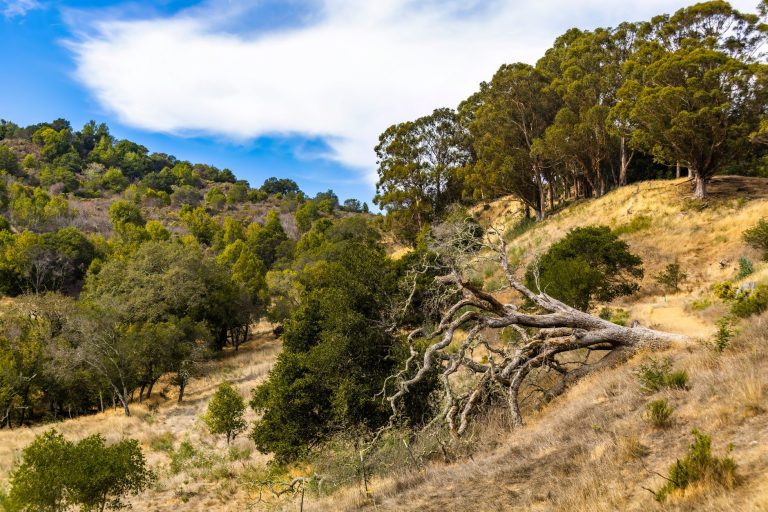
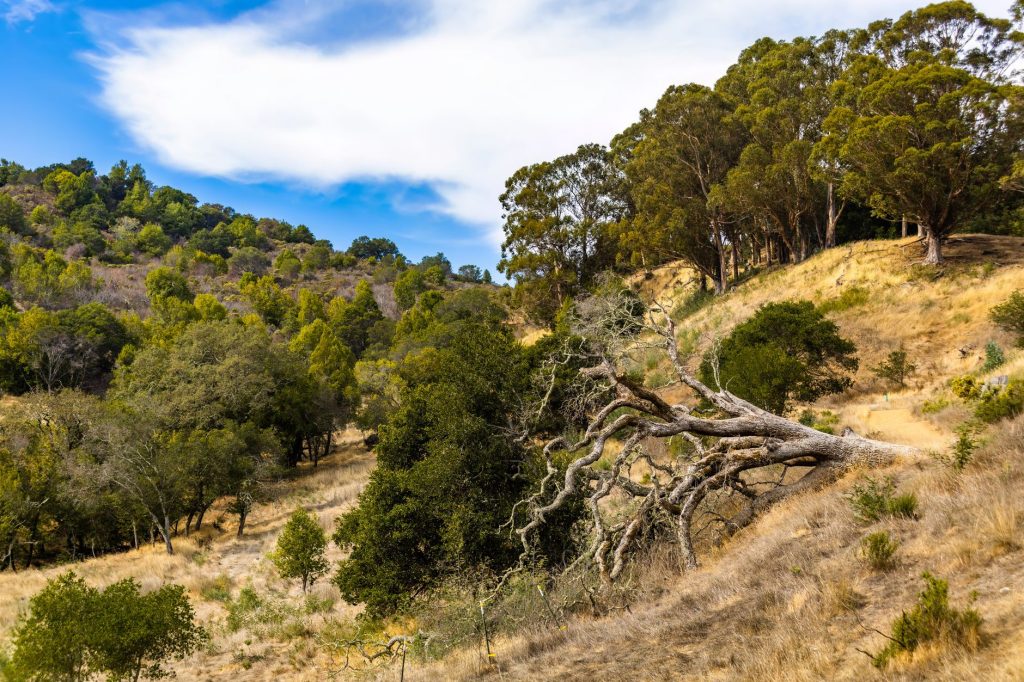
The trailhead network branching from the Nature Center spans everything from flat, wide fire roads suitable for strollers to narrow single-track that climbs steeply into the hills above Thousand Oaks. The Wildwood Canyon Trail and the Mesa Trail are the two main arteries. Hikers looking for a moderate two-to-three hour loop without backtracking tend to combine the Canyon Trail with the Upper Meadows path before looping back via the creek. The terrain shifts noticeably — open grassland gives way to oak woodland, then into drier, rockier scrub as elevation increases. Wildflowers push through from late February into April depending on rainfall; in dry years the bloom is subtle, but the landscape holds its own regardless.
Wildlife sightings are routine rather than remarkable: mule deer graze near the creek zone in the early morning, red-tailed hawks ride thermals above the ridge, and the occasional coyote trots across the fire road with practiced indifference. Birders tend to arrive at dawn for the best activity along the creek corridor. By midday the bird action slows, but the light on the hills is better for photographs.
Parking is free. The Nature Center is open Wednesday through Sunday, generally 9 a.m. to 5 p.m., though hours can shift seasonally. There are restrooms at the trailhead and at a couple of points deeper in the park. Dogs are allowed on leash on most trails. Water should be carried in — there is no reliable source along the trail system itself, and the exposed chaparral sections get genuinely warm by early afternoon in summer.
The Nature Center functions as the practical gateway to what is, by any reasonable measure, one of the more varied open space parks in the Conejo Valley. It doesn’t announce itself; the building is easy to walk past. But stopping there first, even briefly, tends to change how people move through the park — with more intention, and usually with a better trail choice than they would have made otherwise.