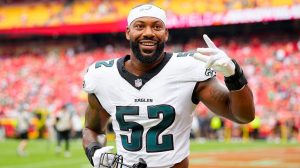
A study published in the British Medical Journal this week provides one of the most comprehensive estimates to date of chronic traumatic encephalopathy (CTE) among former National Football League players. Researchers examined death‑certificate data for former players who died between 2016 and 2021 and compared those figures with the number of brain donors whose autopsies confirmed CTE.
Key findings
Out of 878 former NFL players who died during the six‑year period, 235 families donated the athletes’ brains for research. Of those donated brains, 215 were diagnosed with CTE, indicating that roughly one in four former players who died in that span had the disease.
The study’s lead author, Dr. Daniel Daneshvar of Mass General Brigham and Harvard Medical School, noted that repeated traumatic brain injuries are a known risk factor for neurodegenerative disease. He added that former NFL players experience about four times the rate of death from such diseases compared with the general population.
Broader context
CTE is a progressive brain disorder linked to repeated head impacts. Symptoms can include memory loss, impulse‑control problems, anxiety, depression and anger. While the condition can only be confirmed after death, it has been identified in athletes from football, hockey and soccer, as well as in military personnel exposed to explosions and some victims of domestic violence.
A prior analysis found CTE in 99% of former NFL players who voluntarily donated their brains, but that sample was likely biased toward families who observed symptoms. The new study sought to address that limitation by using a broader death‑record dataset and focusing on the years with the highest number of brain donations.
Implications for the sport
Researchers emphasized that the majority of head impacts occur before the professional level. “The bulk of the hits these former players experienced didn’t happen in the NFL; they happened in college, high school and youth leagues,” Daneshvar said. He urged that the safety measures adopted by the NFL—such as limiting contact practices to less than once per week—be extended to all levels of play.
The NFL’s 2011 collective bargaining agreement already limited the number of contact practices during the season, and the current agreement, ratified in 2020, continues those restrictions through 2031. The Ivy League banned full‑contact tackling in practices five years later, and the Supreme Court cleared the way for the league’s 2016 settlement of concussion‑related lawsuits with thousands of retired players.
What the league says
An NFL spokesperson reiterated the league’s commitment to player safety, noting ongoing efforts to reduce concussions and provide resources for former players to address physical and mental health concerns.
Daneshvar concluded that without changing even a single minute of game time at the youth, high‑school or collegiate level, the cumulative burden of head impacts could be substantially reduced, potentially lowering the risk of CTE and other neurodegenerative conditions for future generations of athletes.
Original reporting: El Paso News (HLL/CB) — read the source article.