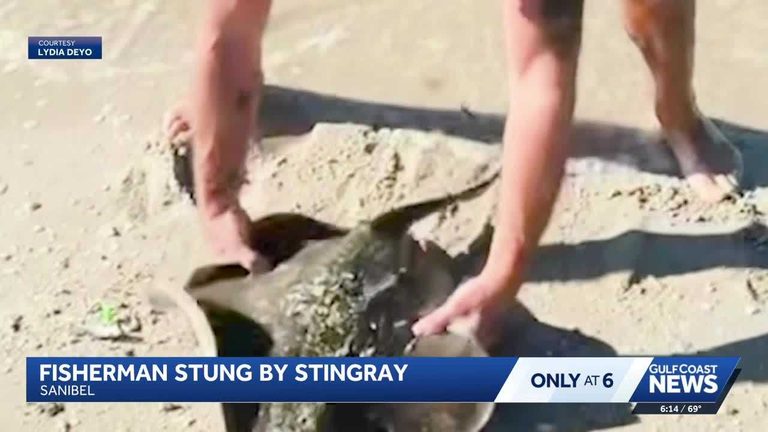
Lee County resident Jerry Lantz was fishing along the Sanibel Causeway in early November when a stingray he hooked turned aggressive and thrust its barb into his hand. The sudden strike sent him to Lee Memorial Hospital, where he spent four days receiving antibiotics and surgery to treat a serious infection.
What happened
According to Lantz, he had caught many fish and rays over the years, but “never had that one. That one was really wild.” He described the stingray as “flip‑flopping everywhere” and “determined to get somebody.” Before he could roll the animal onto the deck, the ray struck, driving its barb straight into his hand. “It happened so fast,” Lantz said.
After the sting, Lantz rinsed his hand in the Gulf water, hoping the pain would subside. “The pain was severe – worse than I’ve ever experienced in my life,” he recalled. Two days later, swelling and infection forced him to seek care at Lee Memorial Hospital. He required powerful antibiotics and a surgical procedure to clean the wound and prevent further complications.
Medical response and recovery
Doctors at Lee Memorial Hospital treated Lantz for a serious bacterial infection that can follow stingray injuries if the wound is not promptly and properly cleaned. He remained in the hospital for four days, during which he received intravenous antibiotics and a minor operation to debride the wound. “I was scared. I didn’t know what to think because we were terrified,” Lantz said of his hospital stay.
After discharge, Lantz was left with stitches and a course of physical therapy to restore hand function. He expressed relief that he avoided a more severe outcome, noting, “I could have lost my whole hand over this.” He hopes to return to fishing soon, but urges fellow anglers to take precautions.
Safety advice from the Florida Fish and Wildlife Conservation Commission
The Florida Fish and Wildlife Conservation Commission (FWC) advises anglers to handle stingrays with care. If a ray must be removed from a line, the agency recommends using a de‑hooking tool or pliers rather than pulling it by the tail. When handling the animal, anglers should grasp the wings on either side of the head, keeping the barb and tail pointed away from the body.
FWC also promotes the “stingray shuffle” – a slow, shuffling walk through shallow water – to avoid stepping on hidden rays. The commission stresses that leaving the tail and barb intact and releasing the ray promptly reduces the risk of injury to both the animal and the fisherman.
Community impact
Lantz’s experience serves as a reminder to the local fishing community that even familiar waters can present unexpected hazards. While many anglers enjoy the abundant Gulf fish and marine life, the incident underscores the importance of proper safety protocols and prompt medical attention when injuries occur.
Local outdoor retailers and fishing clubs have begun sharing the FWC’s guidelines on social media, encouraging members to review safe‑handling practices before heading out on the water. By spreading awareness, the community hopes to prevent future stingray injuries and keep Florida’s beloved coastal recreation safe for all.
Original reporting: KCCI Des Moines — read the source article.