There is a small, sky-blue dome sitting at the corner of 2nd Street and Elgin Avenue in downtown Tulsa, and once you spot it, you will not be able to stop thinking about it. The Blue Dome — a 1924 Gulf Oil service station that looks like something a science-fiction illustrator dreamed up between the wars — is the beating heart of one of Tulsa’s most electric neighborhoods, and it has become my favorite excuse to spend an entire afternoon wandering downtown without any particular agenda.
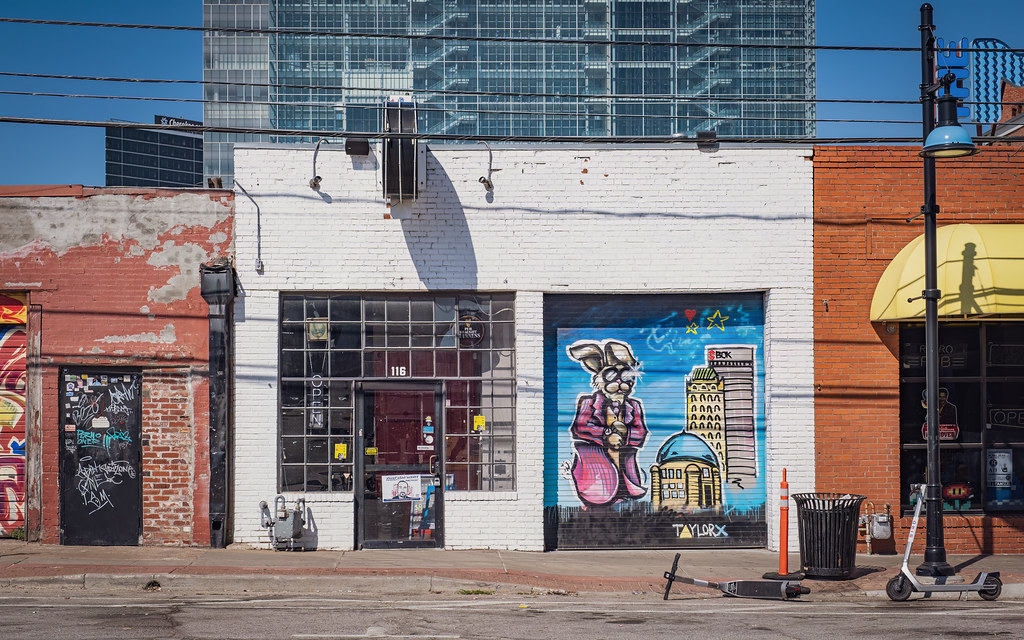
The Blue Dome District fans out across a compact grid of brick streets just south of the IDL, and the whole area carries that particular energy of a place that has been through hard times and come back swinging with better taste. Restored warehouses and low-slung storefronts line the blocks, their facades lit at night by neon signs and string lights that reflect off rain-slicked pavement in a way that feels almost cinematic. During the day, the neighborhood is relaxed and walkable. Come evening, it hums.
The anchor of it all, of course, is that dome itself. Listed on the National Register of Historic Places, the cylindrical white-and-blue structure was built to serve Route 66 travelers, and it sits at the confluence of several historic roads with an architectural confidence that modern buildings rarely manage. You can walk right up to it, photograph it from every angle, and feel the full weight of Tulsa’s oil-boom-era ambition in one compact structure. It is free, it is always there, and it rewards multiple visits at different times of day.
But the district around it is where you will genuinely lose track of time. Duet, a beloved live music and dining spot, brings in local and regional acts in an intimate setting. McNellie’s Public House pours an encyclopedic selection of craft and imported beers in a warm, unpretentious room that fills up early on weekends. Antoinette Boulangerie, tucked nearby, produces French pastries that have no business being this good in the middle of Oklahoma — and yet here we are.
On the first Friday of each month, the district throws open its doors for First Friday Art Crawl events, with galleries, pop-up vendors, food trucks, and live music filling the sidewalks well into the evening. It is genuinely festive without being overwhelming, and it is one of those Tulsa experiences that makes you realize how much creative energy this city quietly generates.
Parking is easy — there are surface lots on most surrounding blocks, and metered street parking is plentiful on weekday evenings. The district is also walkable from the BOK Center and several downtown hotels, so if you are already in the neighborhood for a show or a conference, the Blue Dome area should be your automatic after-dark destination.
What I love most about this corner of Tulsa is that it does not try too hard. The history is genuinely present, the food and drink options are legitimately good, the music is real, and the people watching is top tier. It is the kind of place where a quick post-dinner drink turns into a three-hour conversation with strangers who become temporary friends. Tulsa does that to you, and the Blue Dome District is where it happens most reliably.