There are places you visit, and then there are places that visit you — that follow you home, settle quietly into your thoughts, and change the way you see the world. The National Center for Civil and Human Rights in downtown Atlanta is firmly in that second category, and I cannot recommend it highly enough to anyone who finds themselves in this city.
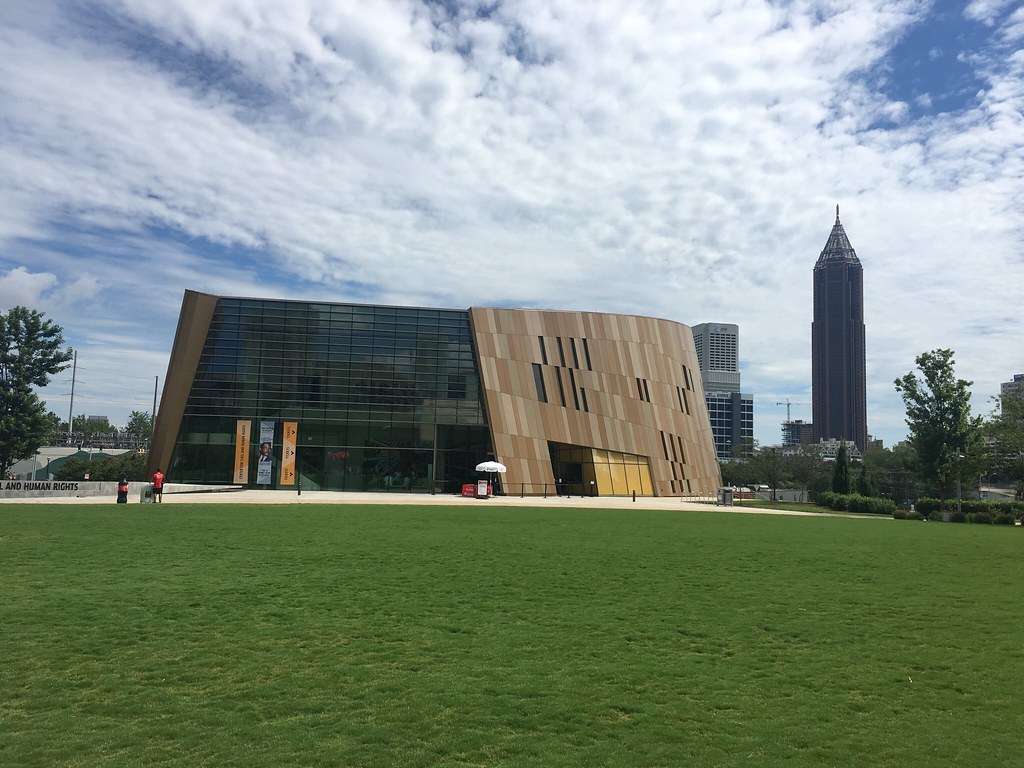
Situated just steps from Centennial Olympic Park and the Georgia Aquarium in the heart of downtown, the museum occupies a striking, undulating building designed by architect Philip Freelon. From the outside it draws your eye with its sweeping curves and warm wood tones. Inside, it opens into something far more expansive than its footprint suggests — both physically and emotionally.
The centerpiece of the experience is the Rolls Down Like Water exhibition, which chronicles the American Civil Rights Movement of the 1950s and 1960s. The curatorial team has done something remarkable here: rather than presenting history as a series of dates and photographs behind glass, they have reconstructed it as something you can almost feel. One of the most talked-about moments in the museum is the lunch counter simulation, where you place your hands on a replica of a Woolworth’s-style counter, put on headphones, and experience what it felt like to sit in peaceful protest while a hostile crowd surrounded you. The audio is visceral. The discomfort is intentional. The empathy it produces is genuine and lasting.
The second major gallery, Spark of Conviction, shifts the lens to global human rights struggles, connecting Atlanta’s civil rights legacy to movements happening right now around the world. It is a bold curatorial choice, and it works beautifully. You leave understanding that the arc of justice is not just American history — it is ongoing, universal, and deeply personal.
The museum also houses the collection of Dr. Martin Luther King Jr.’s papers and personal artifacts on loan, which alone would justify the trip. Seeing his handwritten notes and correspondence up close is a quietly profound experience that no photograph can replicate.
Plan to spend at least two to three hours here. The exhibitions reward slow, attentive visits, not quick walk-throughs. The staff and docents are knowledgeable and genuinely passionate — if you have questions, ask them. They will make your visit richer.
Admission is very reasonable, the gift shop stocks thoughtful books and meaningful keepsakes, and the on-site café is a comfortable spot to decompress and reflect before stepping back out into the city. The museum is open Tuesday through Sunday, and parking is available throughout the downtown area with several garages within easy walking distance.
Atlanta gave the world Dr. King, John Lewis, and a movement that reshaped a nation. The National Center for Civil and Human Rights makes sure that story is never forgotten — and that it keeps working on people, one visitor at a time.