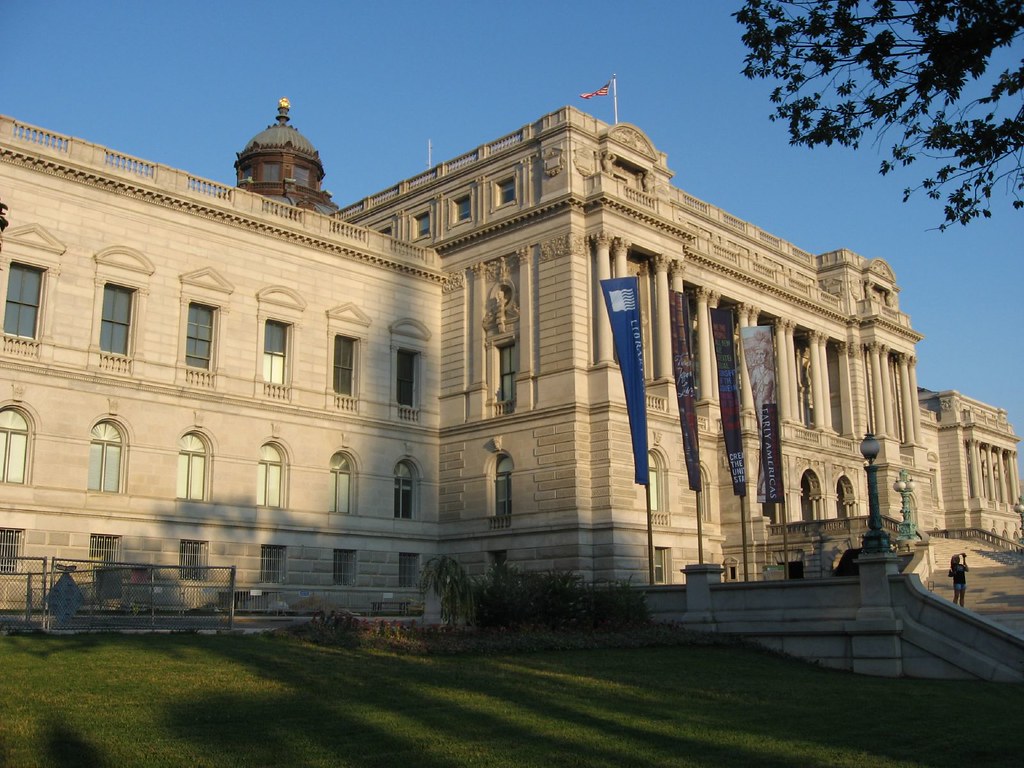
There are moments in Washington D.C. when a building stops you cold — not because of what it represents politically or historically, but simply because it is jaw-droppingly beautiful. The Thomas Jefferson Building of the Library of Congress is one of those places, and somehow it remains one of the most undervisited gems on Capitol Hill.
Situated just a short walk east of the U.S. Capitol on First Street SE, the Jefferson Building opened in 1897 and was immediately hailed as a triumph of American craftsmanship. Step through the bronze doors and you enter the Great Hall, a soaring, ornate space decorated with marble columns, intricate mosaic floors, and elaborately painted ceilings that feel more like a Renaissance palazzo than a public building in the American capital. Gold leaf catches the light. Allegorical figures gaze down from every arch. It is, frankly, overwhelming in the best possible way.
The crown jewel is the Main Reading Room, visible from a visitors’ gallery above. Beneath a 160-foot dome, researchers sit quietly at mahogany desks surrounded by eight marble columns and two tiers of arched alcoves lined with books. Even if you never open a single volume, standing at that railing and looking down at one of the great intellectual spaces in the world is genuinely moving. This is where scholars, writers, and curious citizens have come for well over a century to chase ideas through the stacks.
Beyond the architecture, the Library of Congress holds rotating exhibitions that are free and genuinely excellent. Past shows have featured rare items from the collections — early American maps, original correspondence from founding figures, photography archives, and musical recordings that trace the entire arc of American culture. There is almost always something on display that you had no idea existed and absolutely cannot stop thinking about afterward.
Admission is completely free, which makes the whole experience feel almost unreasonably generous. Guided tours run several times daily on weekdays and offer a deeper look at the building’s history and hidden details — the carved stone faces, the painted allegories, the stories behind specific architectural choices. If you can, book a spot on one of these tours in advance through the Library’s website, as they do fill up, especially in spring and summer.
Plan to spend at least two hours here, and do not rush. Grab a coffee from the nearby café, wander through whichever exhibition is currently on view, and then find your way back to that gallery railing above the Reading Room for one last look. Washington D.C. is full of monuments built to impress, but the Jefferson Building is one of the rare places that impresses you quietly, from the inside out.