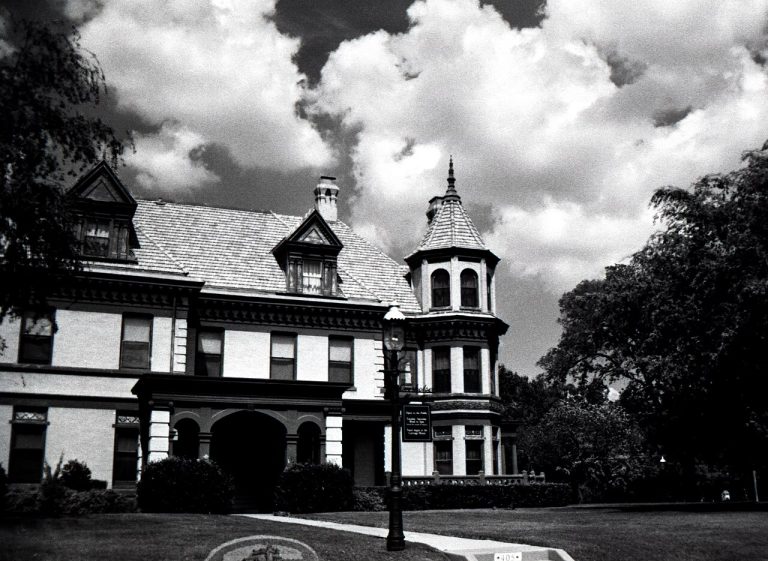
There is a certain kind of building that stops you mid-stride. You round a corner, look up, and suddenly the city feels older, grander, and full of untold stories. That is exactly what happens when you encounter the Teague House on South Perry Street in Montgomery’s Garden District neighborhood. Known formally as the Alabama Governor’s Mansion, this stately Greek Revival home has been welcoming visitors — and sheltering the state’s governors — since 1950, but its roots stretch back to 1914, when cotton merchant Jesse Teague commissioned the original structure. Standing before its towering white columns, you get the distinct feeling that Alabama history is not behind glass here. It is alive, painted on the walls, woven into the rugs, and practically humming through the floorboards.
What surprises most first-time visitors is that the Teague House opens its doors to the public for scheduled tours, and the experience is far more intimate than you might expect from an active executive residence. Docents walk you through beautifully preserved formal rooms filled with period antiques, original artwork by Alabama painters, and furnishings that tell the layered story of the state’s political and cultural life across more than a century. The double parlors are particularly breathtaking — sunlight filters through tall windows onto silk draperies, and every piece of furniture feels like it has a conversation to offer if you would only lean in close enough.
The grounds themselves deserve a slow, unhurried walk. Magnolias and azaleas frame the property in a way that feels less manicured than genuinely Alabamian — lush, a little dramatic, unapologetically Southern. In spring, when the azaleas peak, the gardens surrounding the mansion become one of the most photogenic spots in the entire city. Photographers and casual walkers alike make the short drive down South Perry Street just to absorb the atmosphere, and nobody leaves disappointed.
For history enthusiasts, the Teague House sits at the intersection of so many significant Alabama narratives — civil rights, political evolution, architectural heritage — that a single visit rarely feels like enough. Guides are knowledgeable and genuinely enthusiastic, happy to answer detailed questions and share anecdotes that never make it into the standard history books. It is the kind of tour where you find yourself lingering in doorways long after the group has moved on.
Practical details worth knowing: tours are offered on select weekdays and require advance reservations through the Governor’s Office, so plan ahead rather than showing up spontaneously. Parking along South Perry Street is generally easy to find, and the surrounding Garden District is an excellent neighborhood to explore on foot before or after your visit. Several of Montgomery’s finest historic homes line these same quiet streets, making the whole area feel like a living architectural museum.
Montgomery has no shortage of monuments and memorials that rightfully command your attention, but the Teague House offers something rarer — the chance to stand inside an ongoing story rather than simply reading a plaque about one. Come with curiosity, bring your questions, and let this remarkable place do what it does best: make the past feel extraordinarily present.