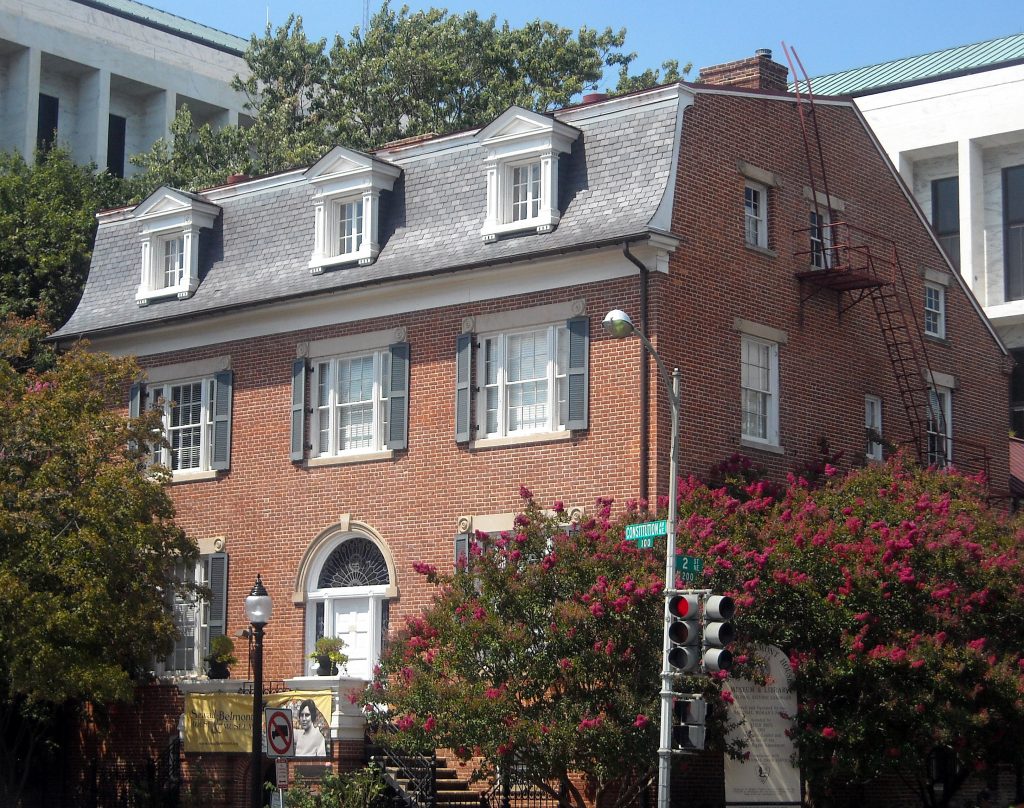
There is a particular kind of thrill that comes from standing in a room where history did not just happen — where history was made, argued over, strategized, and ultimately won. That is exactly what you feel the moment you cross the threshold of the Sewall-Belmont House & Museum, tucked along Constitution Avenue on Capitol Hill, just a short stroll from the United States Capitol dome itself.
The house is one of the oldest on Capitol Hill, with roots stretching back to 1800, and its walls carry centuries of American political drama. But what truly sets this place apart is its deep, defiant connection to the women’s suffrage movement and the long fight for the Equal Rights Amendment. This was the headquarters of the National Woman’s Party, founded by the fearless Alice Paul — the same woman who authored the ERA and spent decades of her life demanding that equality be written into the Constitution, not simply promised in speeches.
Walking through the rooms here feels less like touring a historic house and more like being let in on a great, unfinished conversation. The parlors are filled with portraits of suffragists whose names deserve far more recognition than they typically receive — women who were jailed, force-fed during hunger strikes, and publicly ridiculed for daring to insist on their own citizenship. The museum does not shy away from any of that. It leans into the complexity, the sacrifice, and — crucially — the victories.
The collection itself is remarkable. You will find original banners carried in suffrage parades, Alice Paul’s personal correspondence, legislative documents, and artifacts that bring the movement viscerally close. One of the most striking objects is a replica of the prison door from the Occoquan Workhouse, where suffragists were sent after being arrested for picketing the White House. Standing beside it, you understand in your bones what these women endured.
The staff and docents here are genuinely passionate, and the guided tours are worth every minute. They place the artifacts inside a narrative that connects the 19th Amendment to ongoing conversations about equality — making this museum feel urgent rather than merely historical. It is the kind of place that sends you back out onto the sidewalk with your mind turning over new thoughts.
Capitol Hill is an easy neighborhood to spend a full day in, and the Sewall-Belmont House pairs beautifully with a walk along the Capitol grounds or lunch at one of the neighborhood’s welcoming spots on Barracks Row. Admission is modest, parking is limited (the Metro’s Union Station stop is your friend), and the experience is one that lingers long after you have returned home.
Washington D.C. is full of monuments to power, but this is a monument to persistence — and that, in the end, is far more interesting.