There is a moment, somewhere between the grand staircase and the sunlit gallery on the second floor, when the Gibbes Museum of Art stops feeling like a museum and starts feeling like a conversation. The kind of conversation that only a city as layered and storied as Charleston could host — one about beauty, history, identity, and the peculiar, persistent ways people try to capture all three on canvas.
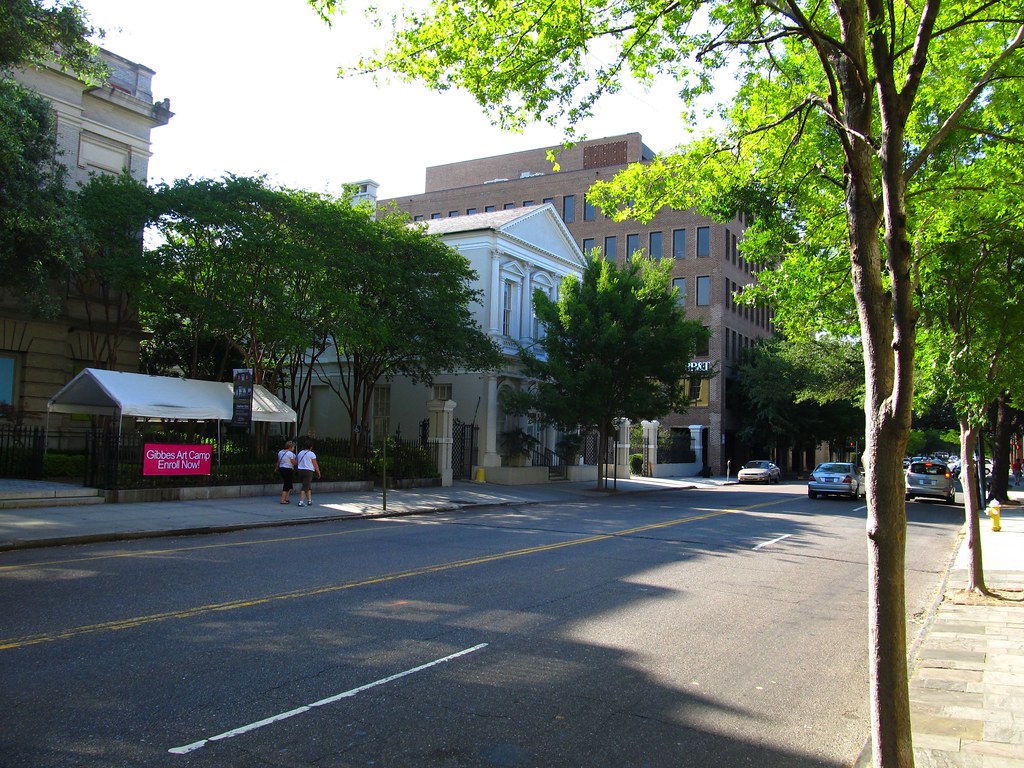
Tucked along Meeting Street in the heart of downtown Charleston, just a short stroll from the Battery and the South Carolina Society Hall, the Gibbes has anchored the city’s cultural life since 1905. The building itself is a landmark worth pausing over: a Beaux-Arts beauty with a domed rotunda that practically dares you to look up the moment you walk through the door. And you will. Everyone does.
But the real draw is what’s inside. The Gibbes holds one of the most significant collections of American art with a Southern focus anywhere in the country. You’ll find portraits of Charleston’s founding families painted with the kind of stiff-backed gravity that makes you wonder what they were really thinking. You’ll encounter landscapes that glow with the particular golden light of the Lowcountry — marshes stretching to the horizon, live oaks heavy with Spanish moss, tidal creeks catching the late afternoon sun. If you’ve spent even one evening watching the light change over the Cooper River, these paintings will feel less like history and more like recognition.
The collection includes work by artists you likely know — Thomas Sully, Gilbert Stuart, Georgia O’Keeffe — alongside a rotating cast of contemporary Southern voices who are actively reshaping what it means to make art in this region right now. The Gibbes doesn’t treat its past as a relic. It treats it as a starting point.
The miniature portrait gallery alone is worth the visit. It’s an unexpected and genuinely delightful room filled with tiny, exquisitely rendered faces — pocket-sized likenesses that wealthy Charlestonians once carried as tokens of affection or remembrance. In an era before photography, these were how people held onto the people they loved. Standing in front of them, you feel the weight of that in a way that no textbook ever quite manages.
Admission is reasonable, the galleries are unhurried, and the staff are the kind of knowledgeable without being precious about it. There’s a lovely courtyard garden that invites you to sit for a while after you’ve wandered through. The museum shop stocks thoughtful, locally made gifts that won’t embarrass you at customs.
Plan for at least two hours, longer if you’re the type who reads every label. Come on a Tuesday morning when the crowds are thin and the light through those tall windows is at its best. Come ready to slow down, look closely, and let Charleston tell you something it couldn’t fit into a ghost tour.