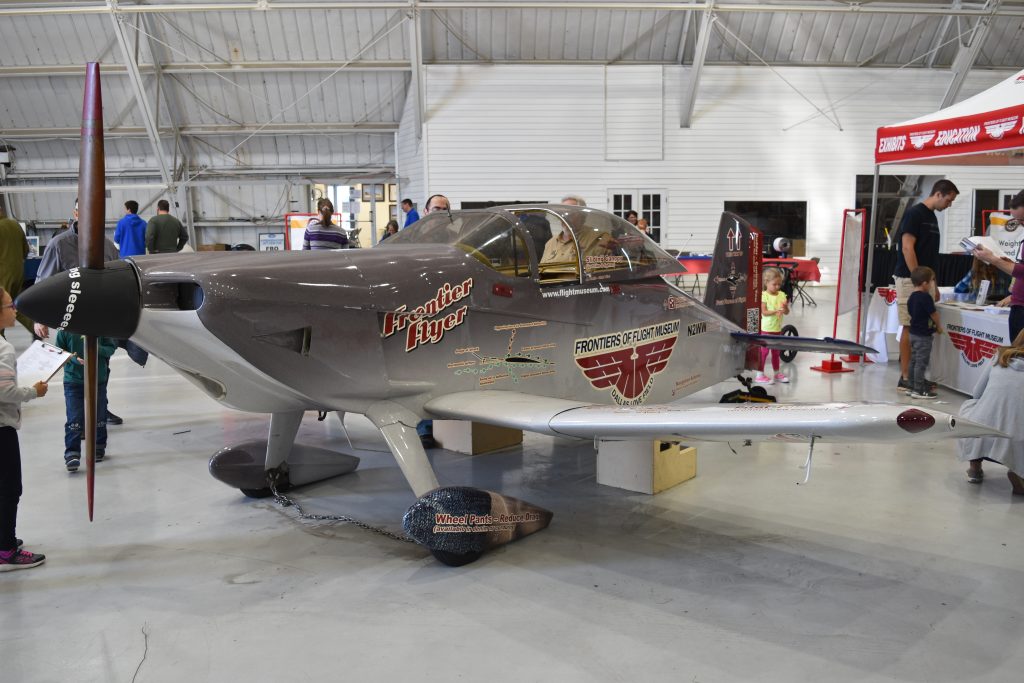
There is a moment, somewhere between standing beneath the nose cone of a genuine Apollo spacecraft and watching a child press their face against the cockpit glass of a restored Vought F4U Corsair, when you realize this place is something genuinely special. The Frontiers of Flight Museum, tucked near Love Field on Lemmon Avenue in northwest Dallas, is one of those rare institutions that earns every superlative thrown at it — and then some.
Most people outside of Dallas have never heard of it. That is their loss and, honestly, your gain. On a Saturday morning when the crowds at bigger attractions are already stacking up, you can walk through 100,000 square feet of aviation and space history with room to breathe, time to linger, and staff who are clearly passionate about every rivet and instrument panel on display.
The collection spans the full arc of human flight, from the fragile genius of the Wright Brothers era all the way through modern commercial aviation and deep-space exploration. You will find a Wright Military Flyer reproduction that puts the audacity of those early pioneers into sharp perspective, and just a few galleries away, an actual Gemini IV spacecraft — yes, the one flown in 1965 — sits close enough that you can study the scorch marks on its heat shield. These are not replicas. That is the real thing, and it never stops being remarkable.
One of the most underrated sections of the museum is its commercial aviation gallery, which traces the evolution of passenger travel from the barnstorming days through the jet age. There is a beautifully preserved de Havilland Comet fuselage cross-section that puts the glamour of mid-century air travel front and center. Leather seats, cocktail service, the whole romantic era of flying — it is all captured here in a way that makes modern economy class feel like a cosmic injustice.
Families with kids will find the hands-on flight simulators genuinely thrilling rather than the watered-down experiences you might expect. Teenagers who arrive skeptical tend to leave quoting altitude figures and asking questions about aerospace engineering. That is the quiet magic of a well-curated museum: it makes curiosity feel effortless.
Plan to spend at least two to three hours here, though half a day is not out of the question. Admission is very reasonable — under fifteen dollars for adults — and parking is free and plentiful. The museum is open Tuesday through Sunday, so plan accordingly if you are scheduling a Monday visit.
Dallas is a city with genuine depth, and the Frontiers of Flight Museum is proof of that. It is not just a place to look at old airplanes. It is a place where human ambition is on full display, wing tip to heat shield, and where you leave feeling like the sky was never really a limit at all.