There is a moment, standing inside the thick brick walls of Fort Condé in the heart of downtown Mobile, when the city’s 300-plus years of layered history stops feeling like something you read about and starts feeling like something you can actually touch. That moment is worth the short walk from anywhere in the central business district, and it is entirely free.
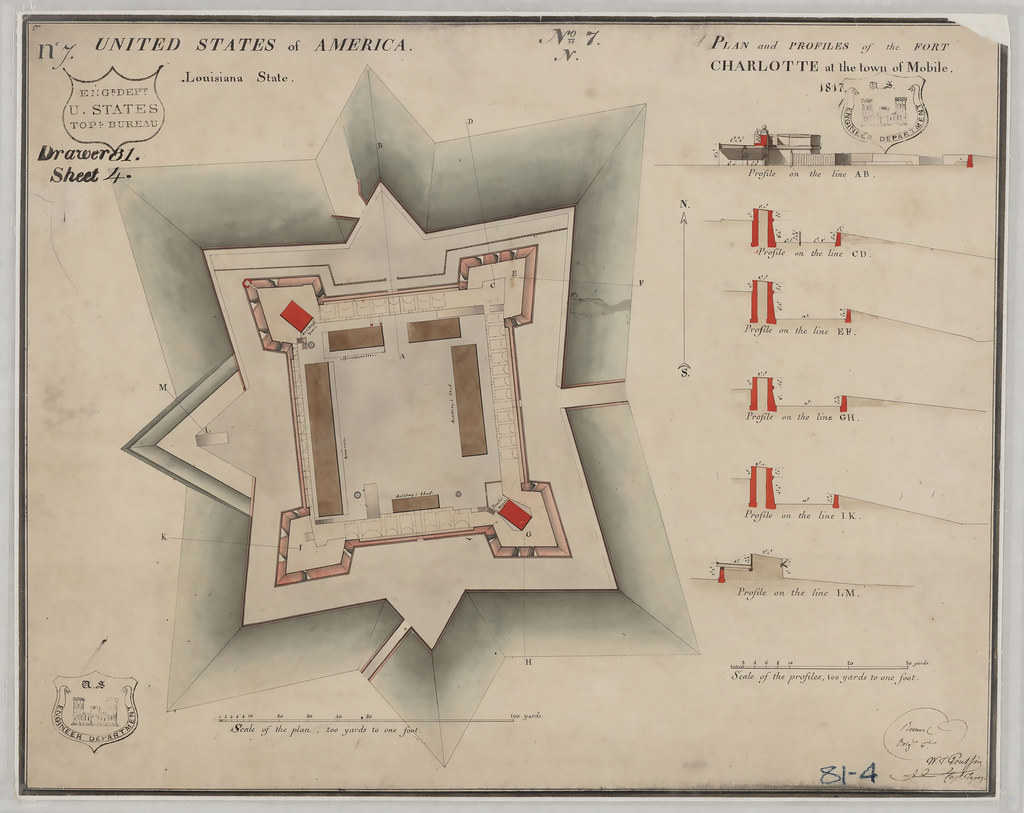
Fort Condé sits at the corner of Royal Street and Church Street, anchoring the southern end of downtown with a quiet, confident authority. The original French fort was constructed beginning in 1711, making it one of the oldest European military installations in the entire Gulf Coast region. What stands today is a meticulous 1970s reconstruction built on the actual archaeological footprint of the original structure, and it wears its authenticity well. The cream-colored masonry walls, the angled bastions, the cannons pointing stoically toward the street — it all feels purposeful rather than decorative.
Walk through the main entrance and you step into a surprisingly spacious interior courtyard. Costumed interpreters are often on hand, particularly on weekends, and they bring a genuine enthusiasm to the story of the French, British, and Spanish powers who each claimed this ground at various points in history. Mobile is one of the few cities in America that flew five different flags before becoming part of the United States, and Fort Condé is the physical embodiment of that remarkable arc. Talking with an interpreter dressed in 18th-century French colonial uniform while standing inside a working fort tends to make that history land in a way that a classroom never quite manages.
Inside the fort, the Welcome Center doubles as a small but well-curated museum. Artifacts recovered during archaeological excavations, period weapons, and detailed exhibits walk you through the colonial era with clarity and genuine depth. The staff here clearly love what they do, and their knowledge is available for the asking. There is no pretension, no velvet rope atmosphere — just good history, well told.
The surrounding plaza and grounds are lovely for a slow afternoon stroll, and the fort makes a natural starting point for exploring the rest of downtown Mobile on foot. Bienville Square, Cathedral Square, and the warren of streets lined with antebellum architecture are all within easy walking distance. Think of Fort Condé as your compass point — the place where Mobile’s story begins, both geographically and historically.
Whether you are a first-time visitor trying to get your bearings or a longtime resident who somehow has never made it through those gates, Fort Condé rewards the visit. Admission is free, parking is available nearby, and the experience of standing inside something this old and this significant in the middle of a living, breathing city is genuinely rare. Mobile has a deep story. This is where it starts.