There is something quietly remarkable about standing in a place where two states meet, and nowhere does that boundary feel more alive than inside the Texarkana Museum of Regional History. Tucked into the heart of downtown Texarkana on State Line Avenue, this museum is one of those finds that sneaks up on you — you walk in expecting a modest local history exhibit and walk out two hours later with your mind buzzing and your phone full of photographs.
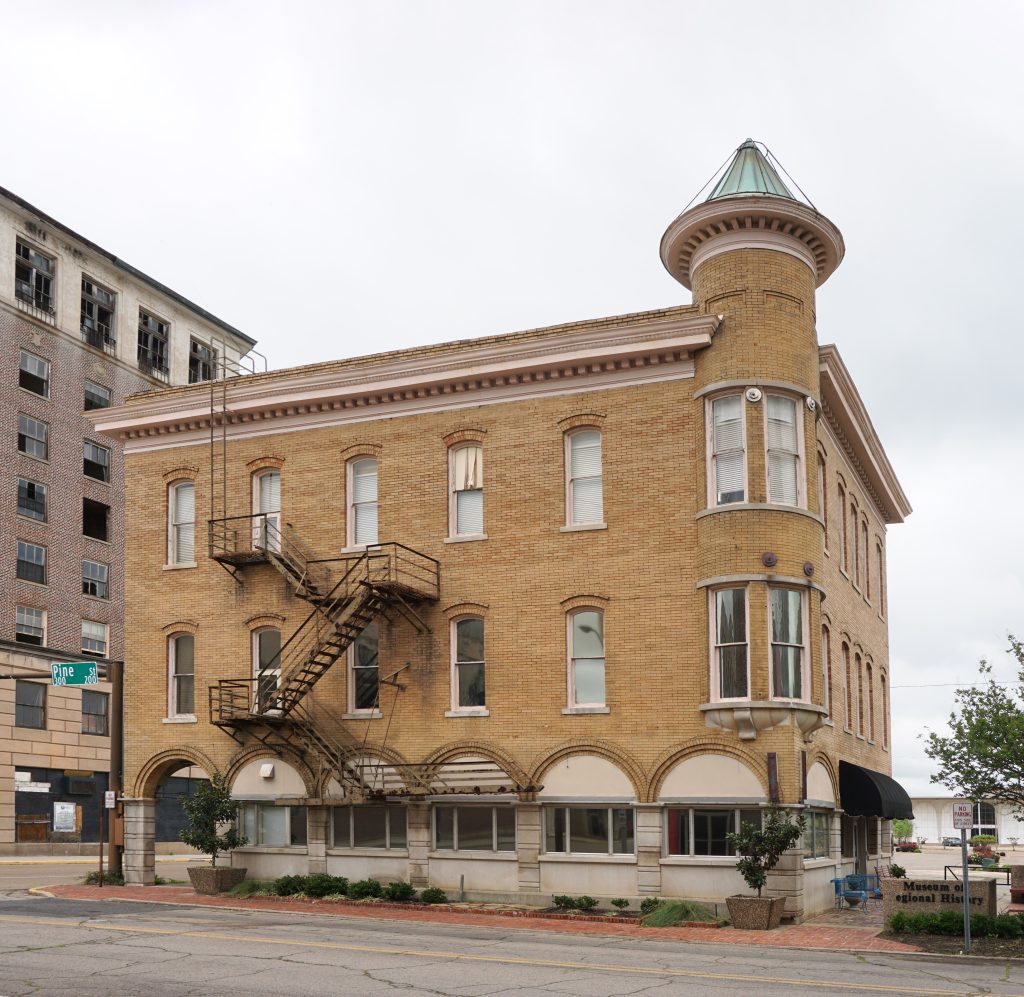
The museum is operated by the Texarkana Historical Society and occupies the handsome 1879 Romanesque-style Perot Theater building complex, a structure that is itself worth the trip. Before you even push through the front door, you are already reading architecture like a history book. The masonry, the arched windows, the sheer solidity of the place — it all signals that what happened here mattered, and the people who lived it knew it.
Inside, the galleries are organized chronologically and thematically, walking visitors through the region’s Indigenous heritage, the arrival of the railroads that essentially conjured this twin-city into existence, the cotton economy, and the dramatic social and cultural shifts of the twentieth century. The railroad exhibit is particularly engrossing. Texarkana was literally built where rail lines converged, and the museum does not let you forget it. You see tools, timetables, photographs of workers, and maps that make the city’s founding feel as vivid and consequential as it actually was.
One of the most talked-about sections celebrates Texarkana’s native son Scott Joplin, the father of ragtime. The exhibit traces his early years in this community and contextualizes his genius within the broader cultural landscape of the post-Reconstruction South. There is a warmth and pride in how this story is told that genuinely moves you. Hearing a snippet of “Maple Leaf Rag” piped softly through a speaker while reading about a young Joplin learning piano in these very streets — that is a travel moment you carry home with you.
The staff are knowledgeable and genuinely enthusiastic. Do not hesitate to ask questions; they tend to open up whole side stories that never made it onto the exhibit placards. The gift shop offers a solid selection of regional history books, locally made goods, and some unexpectedly charming souvenirs that are actually worth buying.
Admission is modest, parking downtown is easy on weekdays, and the museum pairs perfectly with a walk along the famous State Line Avenue where you can literally straddle Texas and Arkansas at the same time. Plan for a leisurely morning or early afternoon visit, then grab lunch at one of the nearby spots on the historic strip.
Texarkana has a story to tell, and this museum tells it beautifully. Come ready to listen.