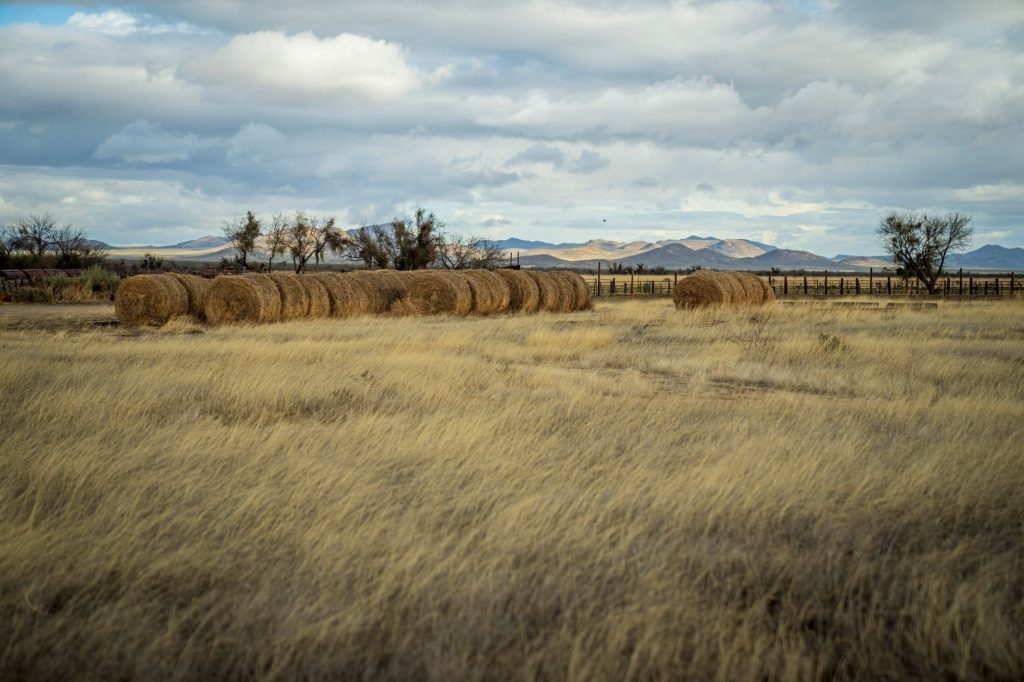
The horses are gone. The pecan orchard is still there, though — rows of old trees casting long morning shadows across packed dirt, their canopy low and dense enough that the temperature drops a few degrees once you step beneath them. Steam Pump Ranch, on the north end of Oro Valley just before the town gives way to Catalina State Park, doesn’t announce itself. There’s no marquee, no food trucks idling, no gift shop. On a Saturday morning in early spring, a few families wander the grounds with kids who haven’t yet started asking when they can leave.
The ranch dates to the 1870s, when a steam-powered pump was installed to pull water from a well and irrigate the surrounding farmland — a small engineering miracle in the desert, and the reason the property survived at all. At various points it ran as a cattle operation, a dairy, and a working farm. Pima County acquired it in 2007 and has spent years stabilizing the adobe structures that remain, including the main ranch house, the bunkhouse, and several outbuildings in different stages of restoration. None of it has been over-restored. The walls are cracked. The wood is weathered. The place looks like it has been used, because it has.
What makes a Saturday morning visit particularly good is that the orchard paths are open for walking and the light through the pecan leaves is genuinely beautiful from roughly eight until ten, before the sun gets high enough to flatten everything out. There’s no admission fee to walk the grounds. Interpretive signs explain the ranch’s agricultural history without being overwhelming — they’re written for adults who are actually curious, not for children on a field trip, though school groups do come through on weekdays.
The county occasionally hosts events here — harvest festivals in autumn, educational programs tied to the orchard — but the ranch’s normal state is quiet. Two or three other visitors, maybe a volunteer doing maintenance near the bunkhouse, a pair of Gambel’s quail moving through the grass near the old equipment shed. The steam pump itself, a replica of the original, sits under a small shelter near the main house and is worth a few minutes of attention. It’s not a flashy artifact, but the docent on duty — when one is present, which isn’t guaranteed — tends to know the property’s history in real depth and will talk as long as anyone wants to listen.
Oro Valley isn’t Tucson proper, but it’s a twenty-minute drive up Oracle Road from midtown, and the northern approach through the foothills feels different enough from the rest of the metro to make the trip feel worthwhile on its own. Steam Pump Ranch sits just off Moore Road, easy to miss if you’re not looking for it. Parking is a small unpaved lot. No concessions, no facilities beyond basic restrooms. Bring water, especially if the visit stretches past mid-morning from March onward.
The ranch is open most days, though hours vary by season and the county occasionally closes it for events or maintenance. Checking Pima County’s parks site before going is worth the thirty seconds it takes. What the place offers — when it’s open and the morning is cool and the orchard is green — is a kind of historical texture that most of Tucson’s preserved sites, polished and curated, have largely sanded away.